
Sapphire vs. Amethyst: Deep Blue Drama or Purple Romance?
Both gemstones bring unmistakable color into jewelry, but they do it in completely different ways. Sapphire is saturated and exceptionally hard. Amethyst moves from delicate lavender to rich violet and changes dramatically with its setting.
The difference begins with color, but it does not end there.
Amethyst is the purple variety of quartz and is traditionally associated with February. Its color can range from pale lilac through deeper violet.
Sapphire belongs to the corundum family and is traditionally associated with September. Although Sapphire occurs in multiple colors, saturated blue remains the color most strongly associated with its name.
The practical difference is significant too. Amethyst measures about 7 on the Mohs hardness scale while Sapphire measures 9. For jewelry worn frequently, Sapphire offers greater resistance to scratching.
But jewelry is not chosen by hardness alone. These two gemstones create very different visual worlds.
Amethyst: lavender, violet and celestial purple
Kherish uses Amethyst far beyond a single purple solitaire.

Ava Amethyst Gold
Warm Gold beside purple creates immediate contrast. The marquise center gives the gemstone a more elongated vintage inspired profile.
Explore Ava
Ava Amethyst Rose Gold
Changing only the metal changes the mood. Rose Gold makes the same purple family feel warmer and more romantic.
Explore Ava Rose Gold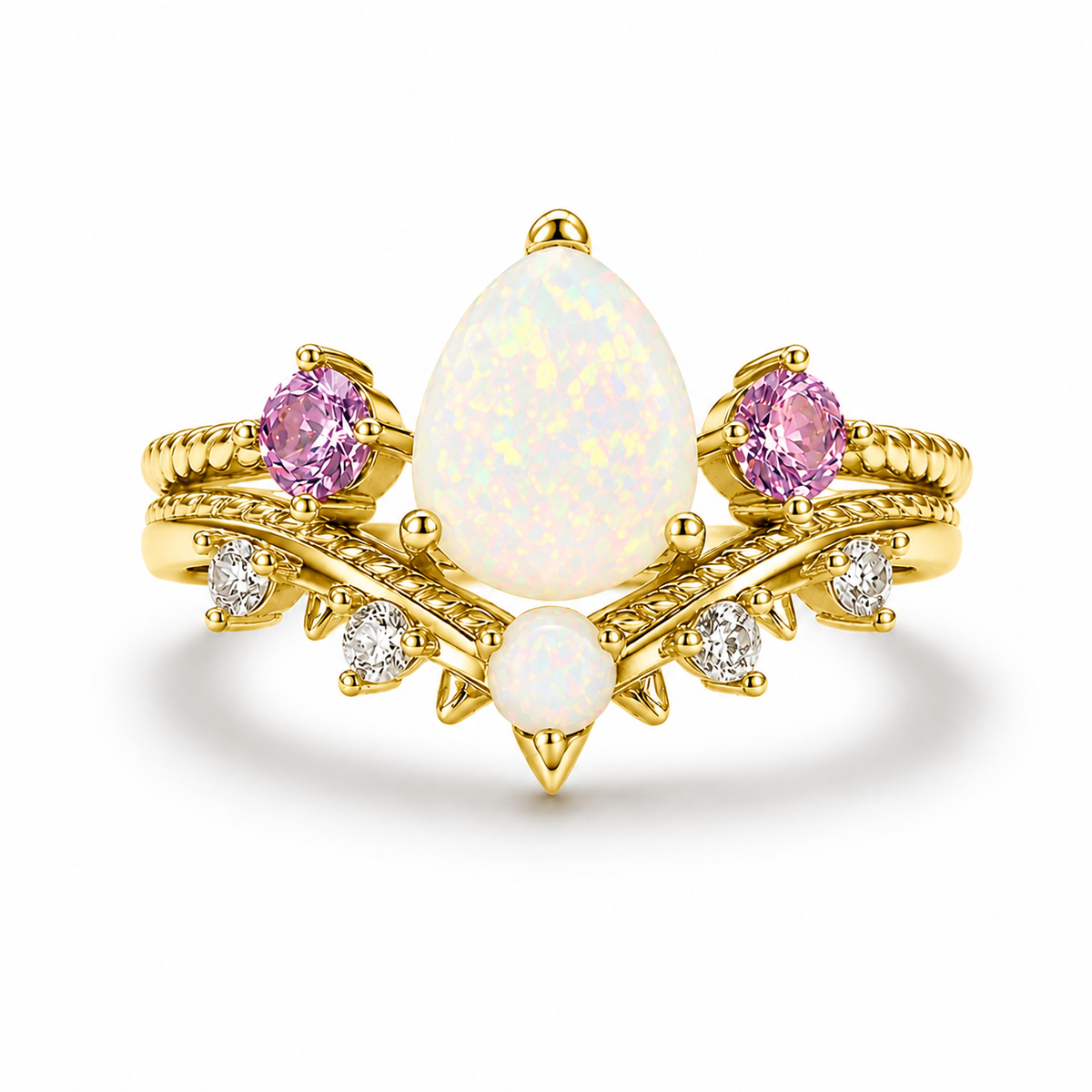
April Opal & Amethyst
Amethyst supplies steady purple while natural Opal introduces changing light, giving the bridal set two different visual behaviors.
Explore April
Francesca Starry Night
Blue Sandstone pushes Amethyst into a celestial palette. Purple no longer reads simply romantic; it becomes part of a night-sky design.
Explore Francesca
Lilly Blue Sandstone & Amethyst
Dark sparkling blue beside violet creates a richer fantasy-inspired combination than Amethyst alone.
Explore Lilly
Dori Amethyst
Dori gives Amethyst another complete ring silhouette, demonstrating how much the gemstone changes when the surrounding architecture changes.
Explore DoriSapphire: blue that can hold the center of an elaborate design

Bella Sapphire
The oval blue center remains unmistakable inside a detailed nature inspired bridal stack. Sapphire's saturation allows it to stay visually dominant.
Explore Bella
Fia Sapphire
Sterling Silver keeps the palette cool and crisp around a saturated blue center.
Explore Fia
Esi & Fia Sapphire
A complete stack allows Sapphire to anchor the color while the surrounding bands build structure around it.
Explore Esi & Fia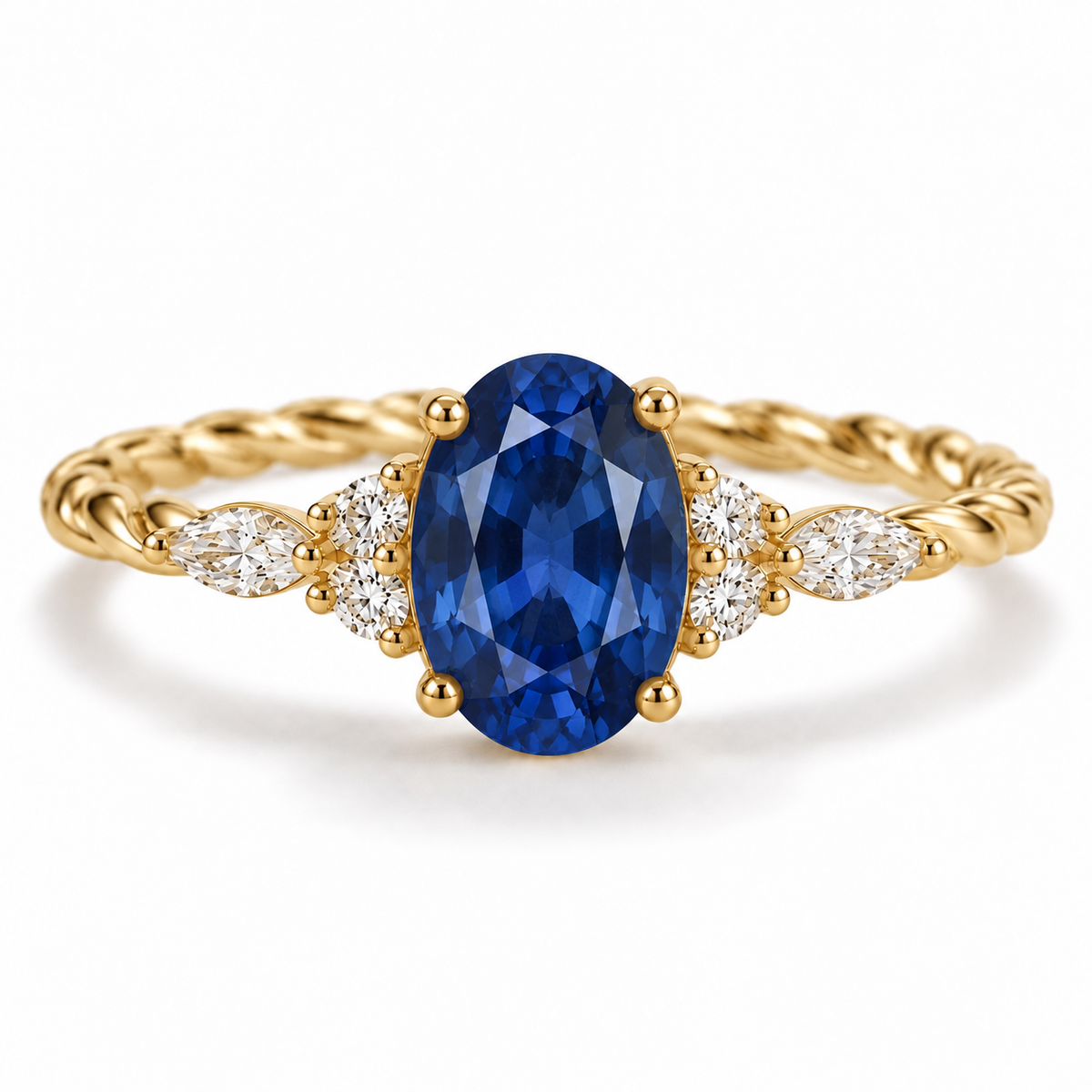
Fig Sapphire Gold
Warm Gold creates strong temperature contrast against blue, making the Sapphire appear even richer.
Explore Fig
Jia Sapphire Earrings
Sapphire moves easily beyond rings while keeping the saturated color that defines the gemstone.
Explore Jia
Jay Sapphire Flowers
Small Sapphire stones become floral petals in solid 14K Gold, showing that blue does not need a large center to remain noticeable.
Explore JayAmethyst
Color: Pale lavender through deep violet
Traditional birthstone: February
Mohs hardness: About 7
Design range: Romantic, vintage, celestial and fantasy inspired
Metal effect: Changes dramatically between Rose Gold, yellow Gold and Sterling Silver
Mixed gemstone pairings: Particularly expressive beside Opal and Blue Sandstone
Sapphire
Color: Best known for saturated blue
Traditional birthstone: September
Mohs hardness: 9
Design range: Botanical, classic, alternative bridal and everyday jewelry
Metal effect: Gold warms the contrast while Silver keeps the palette cool
Mixed gemstone pairings: Especially striking beside luminous Opal
For frequent ring wear, durability is one of the clearest practical differences.
Sapphire's hardness gives it greater resistance to scratching than Amethyst. That makes Sapphire particularly attractive for jewelry expected to spend a great deal of time on the hand.
Amethyst can still be worn in rings, including engagement jewelry, but it deserves more awareness around rough surfaces and hard impacts.
Sapphire is not indestructible and Amethyst is not unusable. They simply have different physical properties.
For color, the comparison becomes personal.
Amethyst can be soft lavender, rich violet, romantic beside Rose Gold or almost celestial beside Blue Sandstone. It changes personality quickly when the setting changes.
Sapphire provides a different kind of presence. Saturated blue can remain visually strong even inside elaborate botanical settings and complete bridal stacks.
Both gemstones go far beyond birthstone jewelry.
February and September may introduce someone to these stones, but they do not define what the jewelry has to become.
Francesca turns Amethyst into Starry Night jewelry. April combines it with Opal. Lilly pushes it toward fantasy. Bella makes Sapphire botanical. Jay turns Sapphire into tiny flowers. Jia moves it into everyday earrings.
The birthstone can introduce the gemstone. The design gives it a personality.
Purple romance or deep blue drama?
Explore Amethyst Explore SapphireRelated Posts

Red Fire Opal: Color That Looks Like It Is Glowing

Why Kherish's Bella Ring and Sets Is Such a Beautiful Nature Inspired Bridal Ring for Fall

Fantasy Engagement Rings Are Made for a Fall Proposal

10 Jewelry Gifts for Her Under $150

Blue Fire Opal: When the Color Refuses to Sit Still

Rachel vs Ivy vs April: Three Completely Different Ways to Wear Pear Cut


