How to Measure Your Ring Size at Home: A Complete Guide from Kherish
Buying a new ring should be exciting, not stressful. Whether you’re shopping for an engagement ring, wedding band, anniversary gift, or a piece you’ll wear every day, choosing the correct ring size is one of the most important parts of the process.
A beautiful ring that doesn’t fit comfortably won’t be as enjoyable to wear, and resizing isn’t always possible depending on the design or material. The good news is that finding your ring size at home is easier than most people think. With a few household items and a little patience, you can get surprisingly accurate measurements before placing your order.
At Kherish, we want you to feel confident when selecting your jewelry, so we’ve put together this guide to help you determine the best fit from the comfort of your home.
Why Ring Size Matters
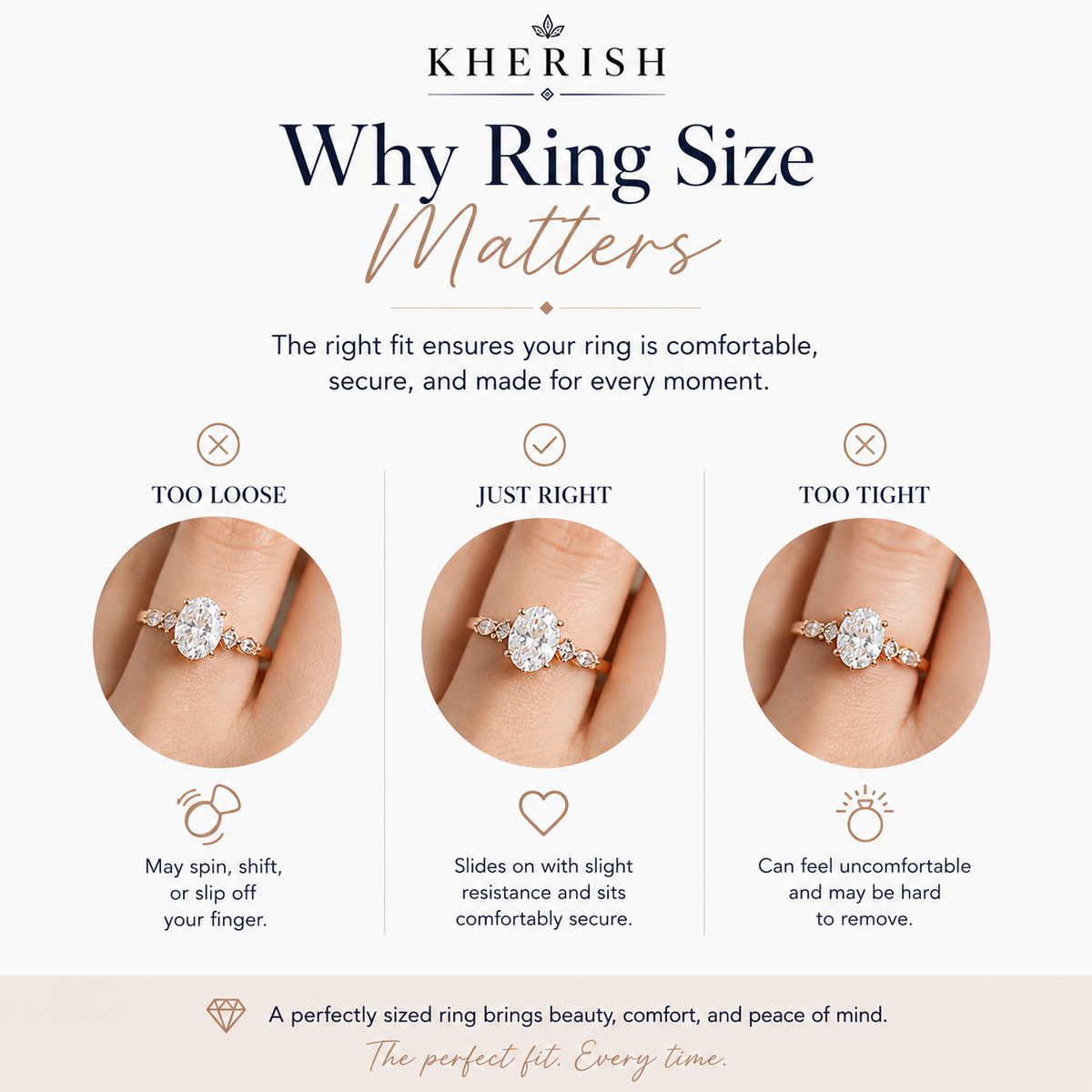
A properly fitting ring should slide over your knuckle with a slight amount of resistance and sit securely on your finger without feeling too tight. If your ring is too loose, it may rotate constantly or even slip off unnoticed. If it’s too tight, it can become uncomfortable and difficult to remove, especially during warmer weather when fingers naturally swell.
Finding the right balance ensures your ring remains comfortable whether you’re wearing it for a special occasion or every single day.
Method 1: Measure a Ring You Already Own
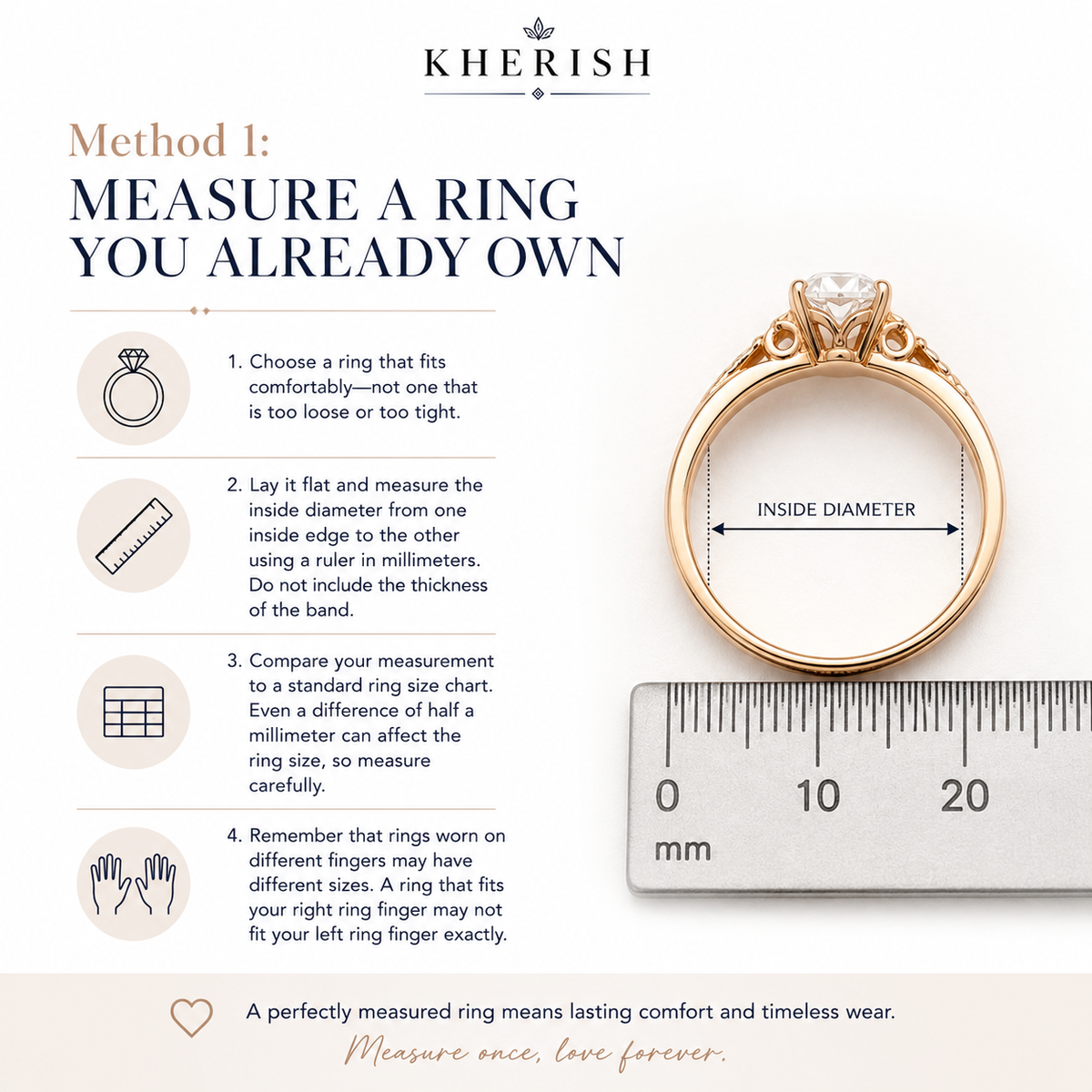
If you already own a ring that fits the finger you plan to wear your new ring on, this is often the easiest and most accurate method.
Choose a ring that fits comfortably—not one that is too loose or too tight. Lay it on a flat surface and measure the inside diameter from one inside edge to the other using a ruler that measures in millimeters. Be careful not to include the thickness of the band itself.
Once you have the inside diameter, compare it to a standard ring size chart. Even a difference of half a millimeter can affect the ring size, so measure carefully.
Remember that rings worn on different fingers may have different sizes. A ring that fits your right ring finger may not fit your left ring finger exactly.
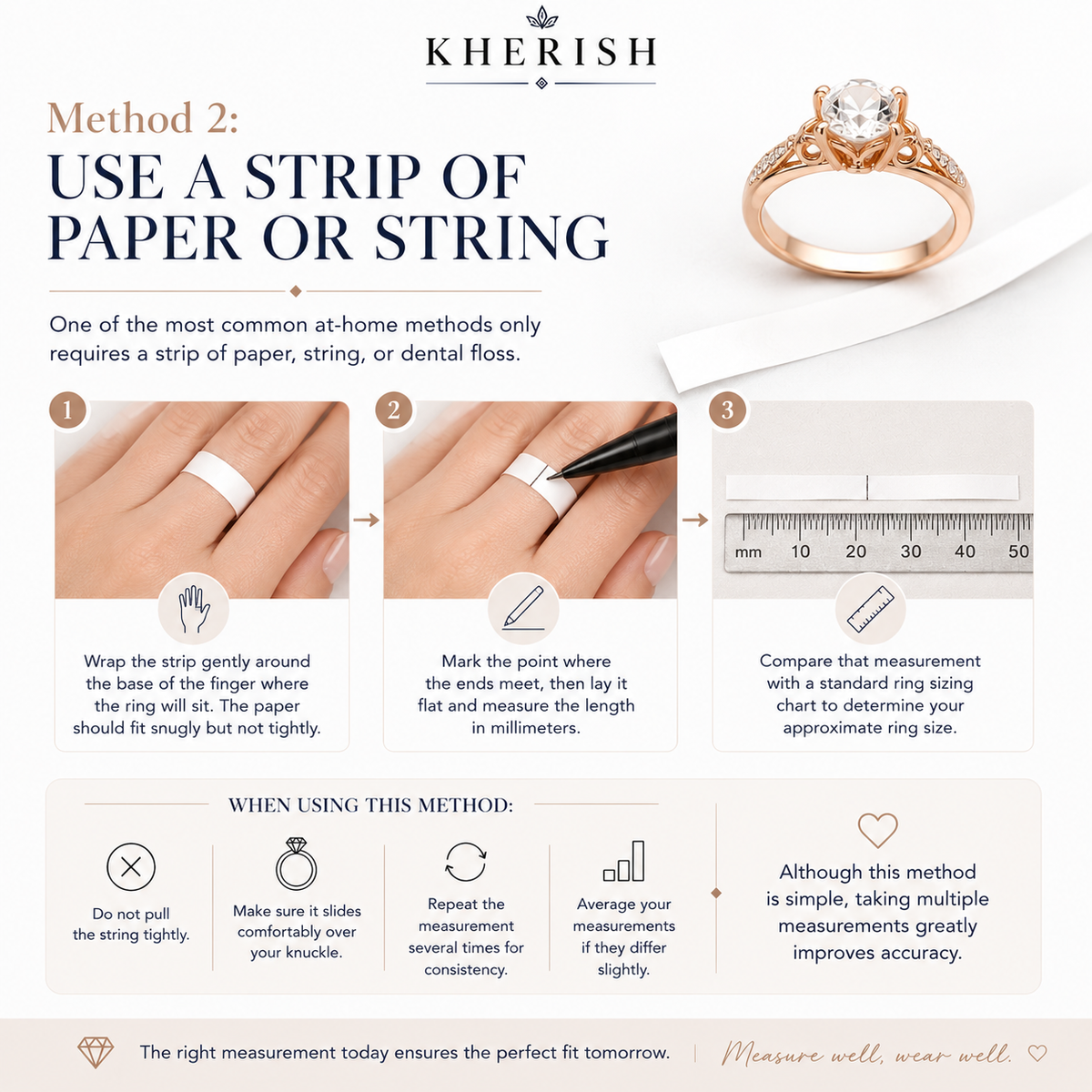
Method 2: Use a Strip of Paper or String
One of the most common at-home methods only requires a strip of paper, string, or dental floss.
Wrap the strip gently around the base of the finger where the ring will sit. The paper should fit snugly but not tightly. Mark the point where the ends meet, then lay it flat and measure the length in millimeters.
Compare that measurement with a standard ring sizing chart to determine your approximate ring size.
When using this method:
- Do not pull the string tightly.
- Make sure it slides comfortably over your knuckle.
- Repeat the measurement several times for consistency.
- Average your measurements if they differ slightly.
Although this method is simple, taking multiple measurements greatly improves accuracy.
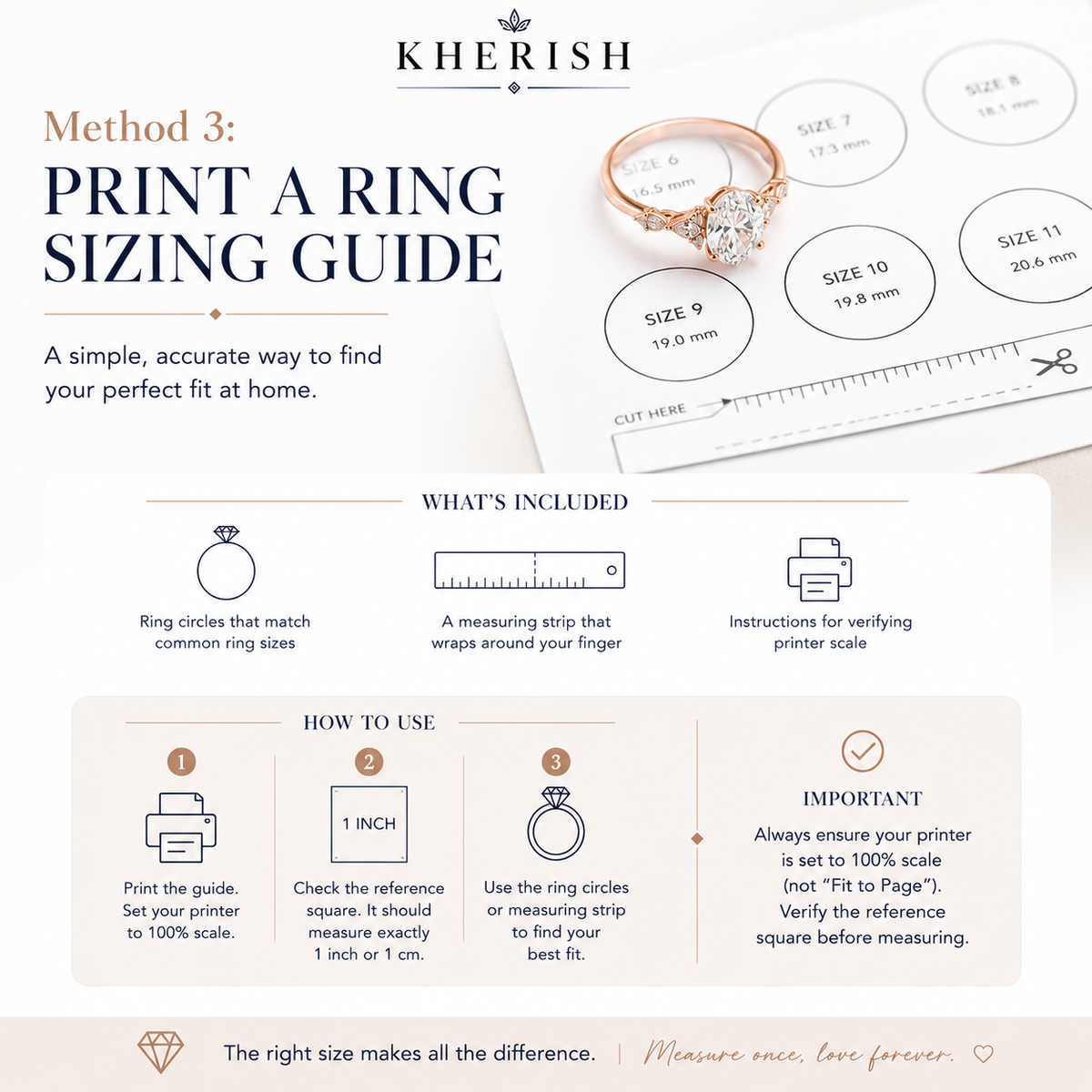
Method 3: Print a Ring Sizing Guide
Many jewelry stores, including Kherish, offer printable ring sizing guides.
These guides typically include:
- Ring circles that match common ring sizes
- A measuring strip that wraps around your finger
- Instructions for verifying printer scale
If using a printable guide, always ensure your printer is set to 100% scale rather than “Fit to Page.” Most printable guides include a reference square that should measure exactly one inch or one centimeter. Verify this before measuring.


Don’t Forget Your Knuckle
Don’t Forget Your Knuckle
Many people have knuckles that are larger than the base of their finger.
If this describes you, your ring needs to comfortably pass over the knuckle without becoming loose once it’s in place.
When measuring, gently slide the paper or string over the knuckle as well. If there’s a significant difference between your knuckle and finger, choosing the larger size is usually the better option. A ring that is slightly loose is often more comfortable than one that cannot be removed.

Consider Band Width
The width of your ring affects how it fits.
Very thin bands usually feel slightly looser than wider bands.
For example:
- A delicate 2mm stacking ring generally fits true to size.
- A wider 6–10mm wedding band covers more of your finger and may feel tighter.
Many people choose to go up about a half size when purchasing wide bands, especially tungsten wedding bands. This creates a more comfortable fit without feeling oversized.
At Kherish, many of our men’s wedding bands feature wider profiles, so this is something worth considering when selecting your size.

Different Fingers Can Have Different Sizes
Different Fingers Can Have Different Sizes
It surprises many people to learn that matching fingers on opposite hands are rarely identical.
Your dominant hand is often slightly larger because it is used more frequently.
That means your:
- Left ring finger
- Right ring finger
- Middle finger
- Index finger
- Thumb
may all require different sizes.
Always measure the exact finger where you plan to wear the ring.

Measure More Than Once
Measure More Than Once
Accuracy comes from consistency.
Instead of measuring once and ordering immediately, take three or four measurements over a couple of days.
If your measurements consistently point to the same size, you can order with much greater confidence.
If you’re between two sizes, your decision should depend on the ring style.
For wider rings, sizing up slightly is often more comfortable.
For thin engagement rings or delicate bands, the smaller size may provide a better fit if your measurement falls exactly between two sizes.

Common Ring Sizing Mistakes
Avoid these common errors when measuring at home.
Pulling the String Too Tight
The measuring strip should rest naturally around your finger. Pulling tightly creates a measurement that is smaller than your actual finger.
Measuring Cold Fingers
Cold temperatures temporarily shrink your fingers, leading to rings that feel too tight later.
Ignoring the Knuckle
A ring must fit over your knuckle as well as the base of your finger.
Using Stretchy Materials
Elastic string stretches and produces inaccurate measurements. Paper or non-stretch string works much better.
Measuring Only Once
Finger size changes throughout the day, so multiple measurements provide better results.

When Professional Sizing Is Best
While home measurements work well for many people, visiting a jeweler remains the most accurate option.
Professional ring sizers use precision tools that eliminate much of the guesswork. If you’re purchasing a significant investment or simply want complete confidence, having your finger professionally measured is an excellent choice.

Featured Collection