
One Style.
Every Identity.
From slim 4 mm bands to bold 8 mm designs, discover why the best ring has nothing to do with gender and everything to do with personal style.
A modern guide to unisex rings, distinctive materials, colorful gemstones, and the freedom to wear what you love.
Somewhere along the way, jewelry became divided into categories that never made much sense.
Narrow bands were described as feminine. Wide bands were labeled masculine. Pink gemstones were placed in one section of a jewelry store, while black tungsten and natural wood were placed in another.
But a ring does not know who is wearing it.
A 4 mm band can look striking on a large hand. An 8 mm ring can be beautiful on a smaller hand. Someone who loves romantic colors might choose morganite, while someone who prefers dramatic jewelry might choose black metal and red opal.
None of those preferences requires a gender explanation.
At Kherish Jewelry, the variety of materials, gemstones, colors, and widths makes it possible to approach ring shopping differently: begin with what you actually love.
What Does Ring Width Really Mean?
Ring width measures the distance across the band from one edge to the other.
A 4 mm band has a relatively narrow profile. An 8 mm band is twice as wide, creating more visible surface area and a stronger presence on the hand.
That difference can dramatically change the appearance of a design.
A colorful inlay in a narrow band might look like a vivid stripe. The same material in a wider band can become the focal point of the entire ring.
Neither width is inherently more masculine or feminine. The difference is visual proportion, personal preference, and comfort.
Start With Color, Not Convention
If you love bright gemstone colors, there is no reason to choose a plain metal band simply because it is traditionally marketed to someone like you.
Red opal offers a particularly vivid example. Its color can make even a narrow ring feel bold and expressive.
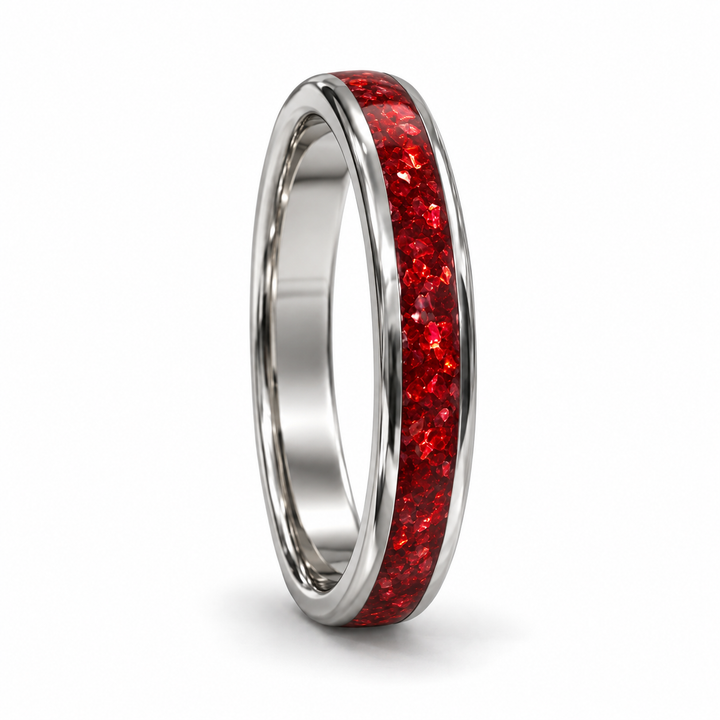
Carl Red Opal — 4 mm
Carl's 4 mm version features a vivid red opal inlay within a tungsten carbide band.
The narrower silhouette keeps the ring streamlined while allowing the gemstone color to remain prominent.
It is a beautiful choice for someone who prefers slimmer bands but does not want to sacrifice personality.
Carl demonstrates that a narrow ring can be every bit as expressive as a wider design.
Explore Carl 4 mm →The Same Ring, a Completely Different Impression
One of the easiest ways to understand the importance of width is to compare the same design in two sizes.
When the gemstone color, metal, and overall style remain consistent, the change in width becomes immediately noticeable.
A wider band creates more visual presence. The inlay occupies a larger area, and the ring becomes more prominent on the hand.
That does not automatically make it a better choice. It simply creates a different aesthetic.
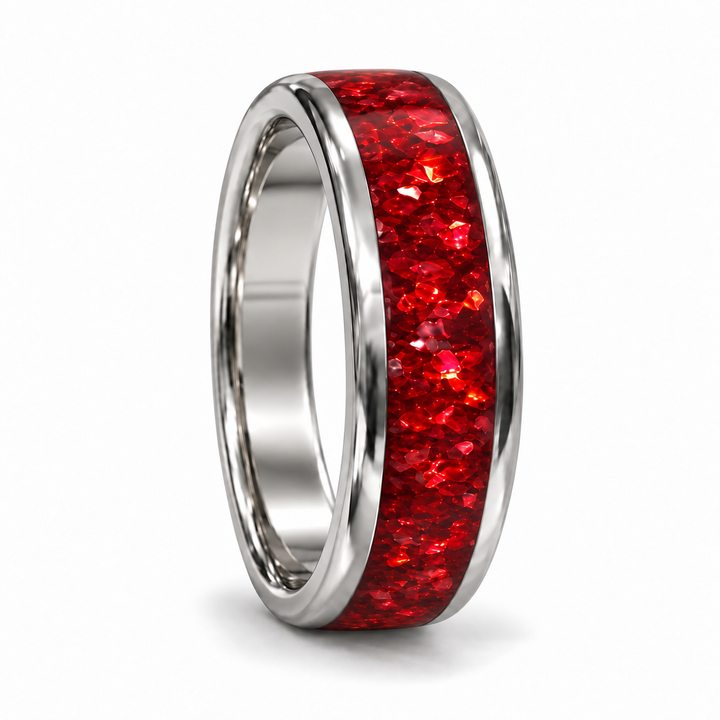
Carl Red Opal — 8 mm
The 8 mm Carl takes the same vivid red opal concept and gives it a broader silhouette.
The additional width allows the colorful inlay to become an even stronger focal point.
For someone who enjoys substantial jewelry, this version offers greater visual impact.
The 4 mm and 8 mm versions can also create a coordinated pair for two people who love the same design but prefer different proportions.
Explore Carl 8 mm →Unisex Does Not Have to Mean Minimalist
Unisex jewelry is sometimes presented as an endless collection of plain silver bands.
But personal expression is not limited to neutral colors and simple surfaces.
A unisex ring can feature bright opal, natural wood, green moss agate, celestial blue, hammered metal, or warm gold leaf.
What makes jewelry suitable for anyone is the freedom to choose it without an unnecessary label.
Natural Materials Have Their Own Personality
Wood offers an entirely different visual experience from conventional gemstones.
Its organic character can bring warmth to a modern metal band, making it particularly appealing to people who enjoy natural materials.
For someone who prefers a restrained width, a wood-inlay ring can provide distinctive detail without requiring a large design.
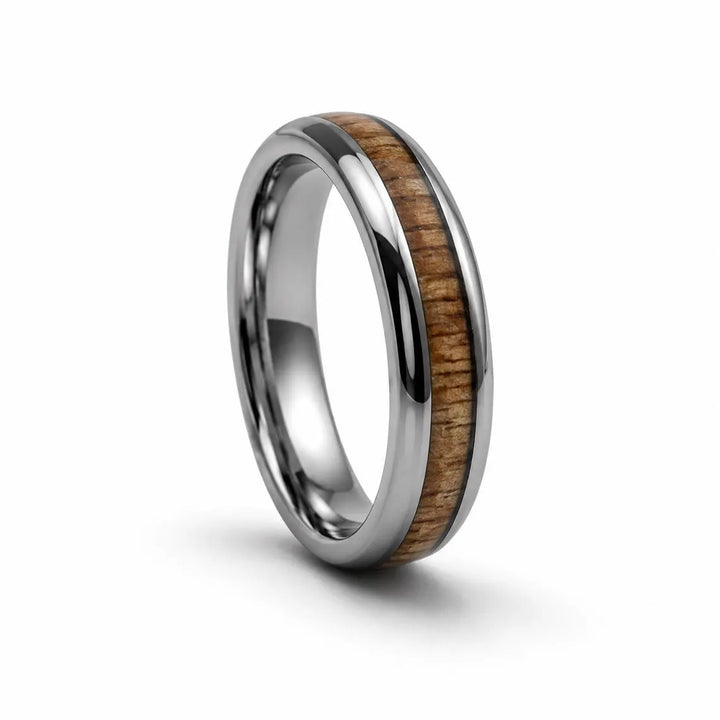
Ted Whiskey Barrel Wood — 4 mm
Ted combines whiskey barrel wood with a narrow tungsten carbide band.
The wood introduces a natural-material aesthetic that feels distinct from polished metal and colorful gemstone inlays.
At 4 mm, Ted offers a streamlined silhouette with visible character.
It is especially appealing to someone who enjoys organic materials, understated jewelry, or designs inspired by the outdoors.
Explore Ted →White Opal: A Softer Approach to Color
Not every colorful ring needs a dramatic gemstone shade.
White fire opal offers a lighter appearance, introducing visual interest without relying on vivid red, green, or blue.
For someone who prefers a neutral wardrobe but still wants an unusual ring, pale gemstone inlays can offer a beautiful balance.
They also demonstrate that the mood of a band can change significantly through material choice alone.
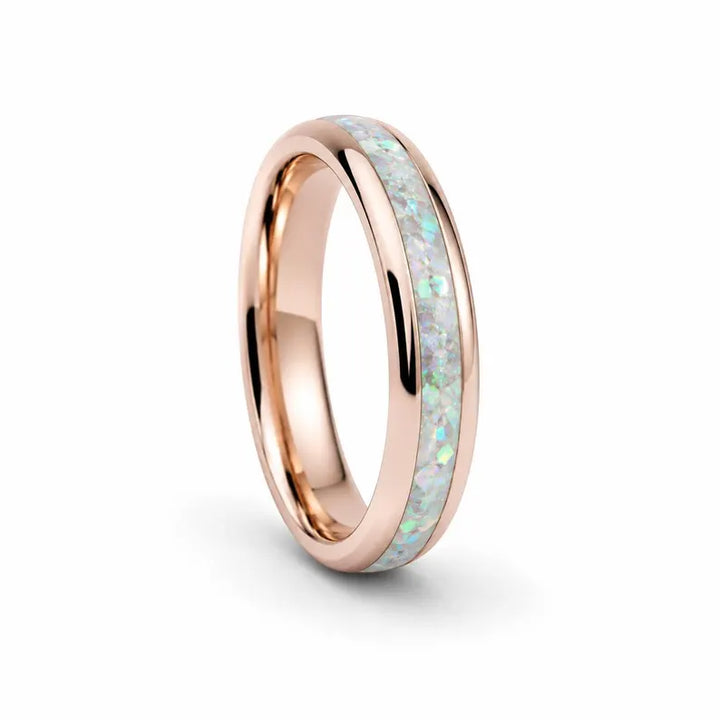
Geri White Fire Opal
Geri combines crushed white fire opal with tungsten carbide.
The pale inlay offers a different aesthetic from the vivid red of Carl or the organic warmth of Ted.
For someone who appreciates a lighter color palette, Geri creates an elegant alternative to conventional plain-metal bands.
Its appeal comes from the material and design rather than any gendered expectation.
Explore Geri →Gemstones and Gold Leaf in Different Widths
Decorative inlays can create particularly interesting comparisons between narrow and wide bands.
When a design combines gemstone color with metallic accents, a narrower version may appear delicate and detailed, while a wider version can make the materials more prominent.
For couples who want coordinated rings without identical proportions, choosing the same materials in different widths can create a meaningful connection.
It is also an excellent approach for someone who loves a particular design but prefers a specific band width.
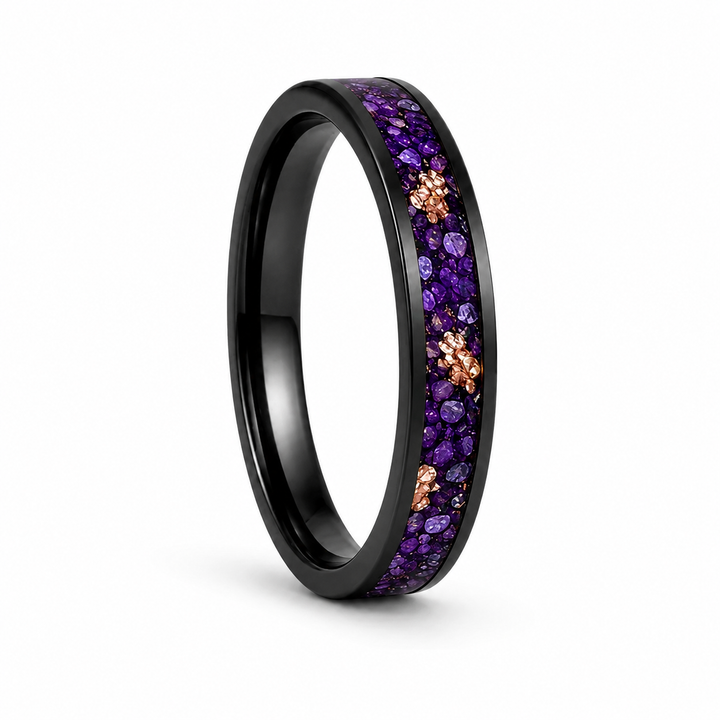
Mensi Alexandrite Gold Leaf — 4 mm
Mensi combines alexandrite-inspired gemstone color with gold-leaf detailing in a narrow band.
The decorative materials offer a more expressive alternative to a simple polished metal surface.
In a 4 mm silhouette, the design creates visual interest while maintaining a streamlined appearance.
For someone who enjoys colorful gemstone inlays but prefers a narrower ring, Mensi offers an appealing direction.
Explore Mensi 4 mm →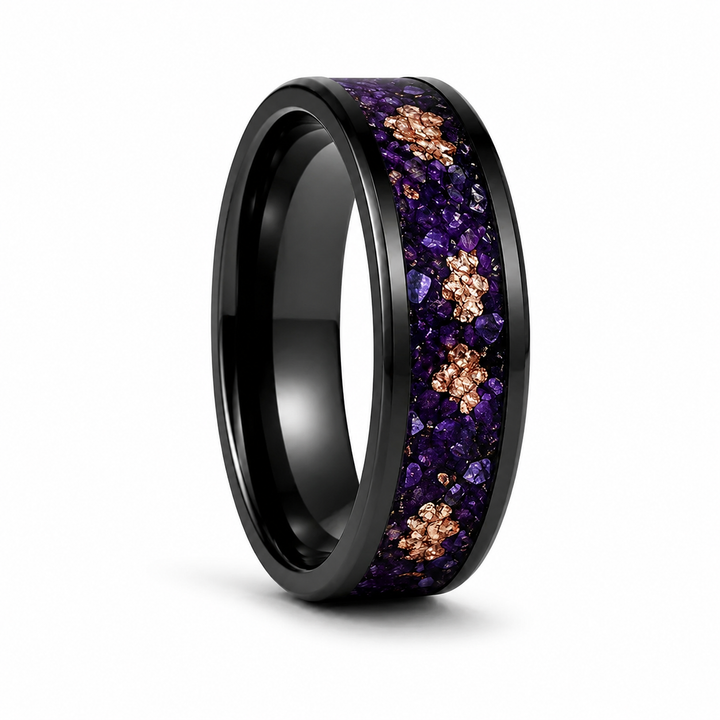
Mensi Alexandrite Gold Leaf — 8 mm
The wider Mensi creates a more substantial interpretation of the gemstone-and-gold-leaf aesthetic.
With more visible surface area, the decorative inlay becomes a stronger element of the overall design.
Comparing the two widths illustrates how proportions can change the presentation of the same materials.
Both widths can be enjoyed by anyone who loves the color and decorative character of the ring.
Explore Mensi 8 mm →Texture Can Be Just as Important as Width
Ring shopping often focuses on gemstones and colors, but surface texture deserves equal attention.
A smooth polished band reflects light differently from a hammered finish. Textured surfaces can give a design more visual depth, while polished edges create a cleaner outline.
Someone who enjoys rugged styling may prefer hammered metal. Another person might gravitate toward smooth, architectural shapes.
Neither choice is more appropriate for a particular gender.
When Red Opal Meets Gold Leaf
Combining a vivid gemstone inlay with warm metallic details creates a more decorative alternative to a simple colored stripe.
For someone who loves texture and contrast, that combination can feel especially expressive.
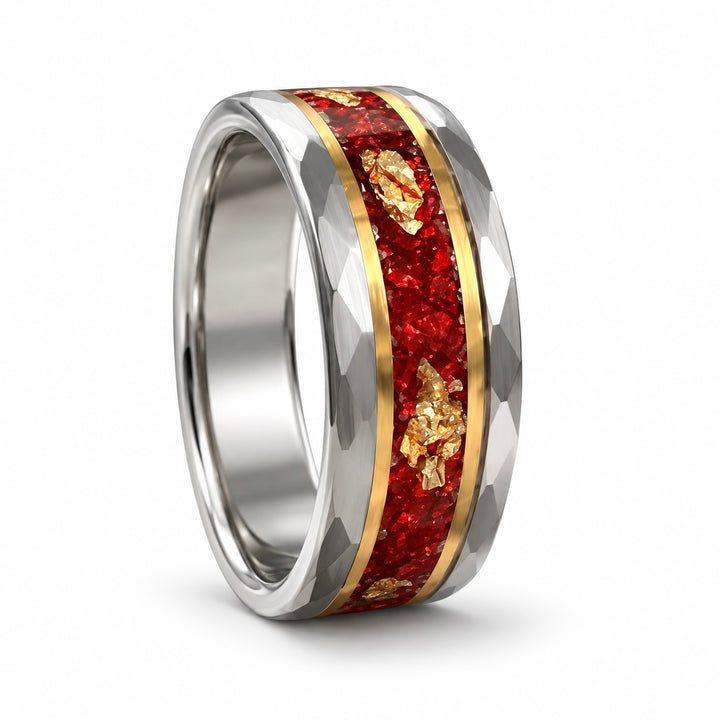
Wren Red Opal and Gold Leaf
Wren combines red opal with gold-leaf detailing in a hammered tungsten carbide design.
The contrast between vivid color and textured metal gives the ring a distinctive appearance.
For someone who enjoys decorative bands with visible personality, Wren offers a different direction from Carl's cleaner silhouette.
It is a strong example of how texture, color, and material can create individuality without relying on a raised gemstone setting.
Explore Wren →Nature-Inspired Rings Are for Everyone
Nature-inspired jewelry can appeal to people with dramatically different personal styles.
Some love delicate botanical settings. Others prefer wide tungsten bands with natural gemstone inlays.
Moss agate is especially distinctive because its inclusions can resemble miniature landscapes, branches, or drifting greenery.
The natural patterns give each stone visual individuality.
For someone who loves hiking, forests, gardens, or organic materials, moss agate can feel especially personal.
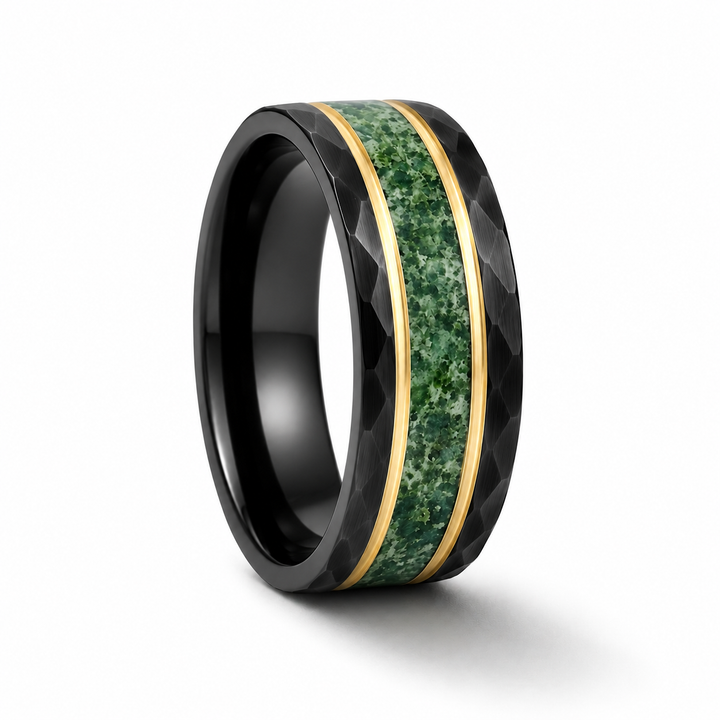
Steve Green Moss Agate
Steve introduces green moss agate into a contemporary men's band design.
The natural gemstone patterns create an organic appearance that differs from the uniform color of many manufactured inlays.
For someone who loves nature-inspired jewelry, Steve offers a distinctive way to bring that aesthetic into an everyday band.
Its appeal is rooted in the gemstone and overall styling, not the gender of the person wearing it.
Explore Steve →Black Metal and Green Gemstones
For someone who prefers a darker aesthetic, black metal can create dramatic contrast with colorful gemstone inlays.
Green opal against a dark hammered surface feels very different from the same color paired with bright polished metal.
It is a useful reminder that a gemstone's appearance depends on the materials surrounding it.
Dark finishes are not inherently masculine, just as soft gemstone colors are not inherently feminine.
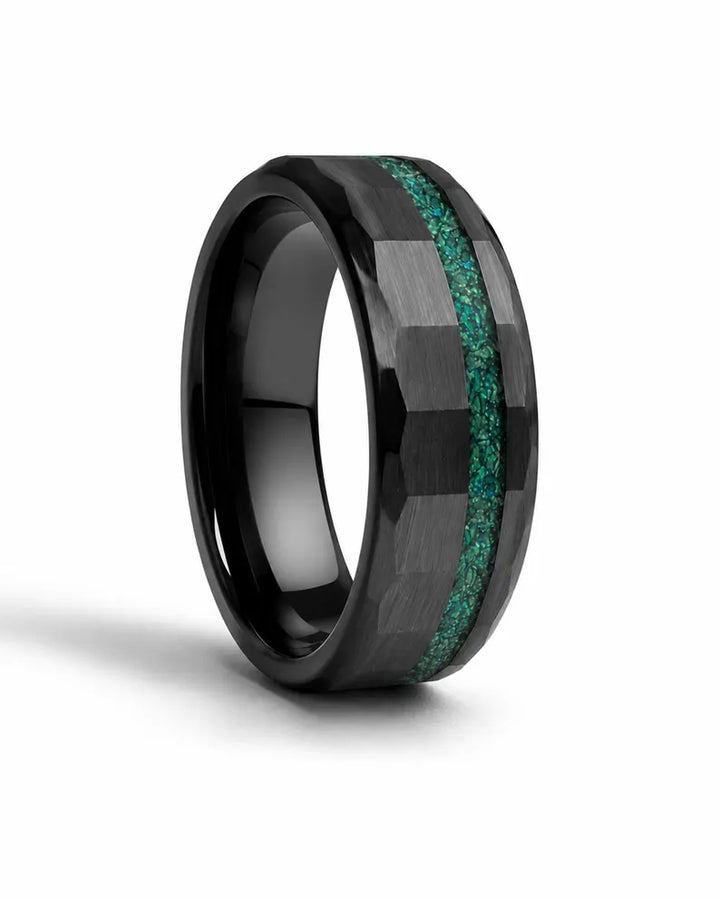
Murphy Emerald Opal Coast
Murphy combines a green emerald-opal inlay with a black hammered tungsten carbide band.
The dark finish provides striking contrast with the luminous green material.
For someone who enjoys modern jewelry with a rugged edge, Murphy offers an expressive alternative to conventional polished bands.
Its strong color contrast makes it appealing regardless of the wearer's gender identity.
Explore Murphy →Why Celestial Rings Feel So Different
Not every ring needs to draw inspiration from traditional jewelry design.
Some bands evoke the night sky through deep blue materials, shimmering inlays, and contrasting textures.
Celestial-inspired jewelry can appeal to astronomy lovers, science-fiction fans, travelers, and anyone who enjoys the mysterious appearance of a star-filled sky.
For a couple choosing rings together, a shared celestial theme can create a connection without requiring identical bands.
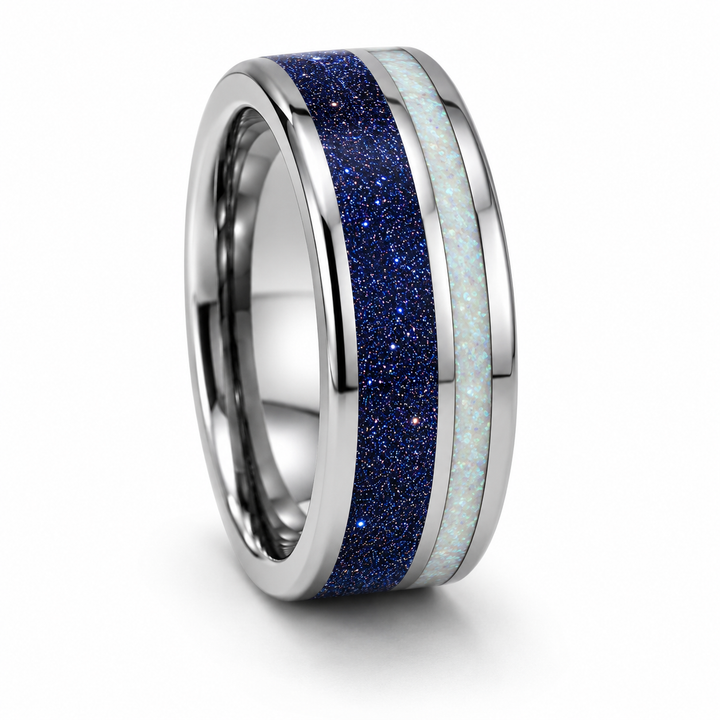
Jorge Starry Night
Jorge combines blue sandstone and crushed opal in a celestial-inspired tungsten carbide band.
The layered materials create a rich blue appearance reminiscent of a night sky.
For someone who enjoys unusual gemstones and cosmic themes, Jorge offers a distinctive alternative to plain-metal jewelry.
It can also make a meaningful choice for partners who share a love of astronomy or travel.
Explore Jorge →Blue Does Not Have to Mean Traditional
Blue is one of the most versatile colors in contemporary jewelry, but different materials can create dramatically different effects.
A smooth blue gemstone, a shimmering sandstone inlay, and a crushed opal design each offer their own character.
For someone who prefers rich color without a raised gemstone setting, a blue inlay band can be especially appealing.
Color should be a source of personal expression rather than a rule about who is expected to wear it.
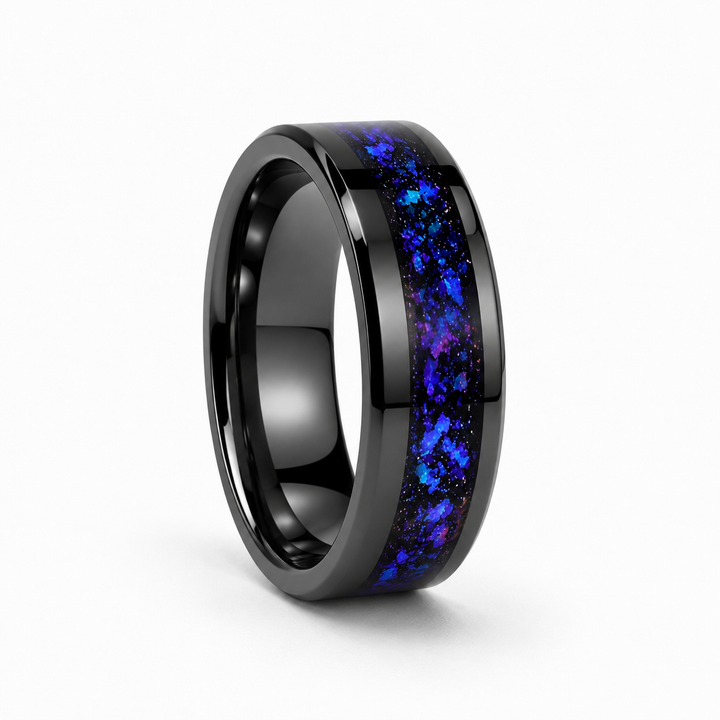
Cory Orion Nebula
Cory brings a celestial-inspired appearance to a contemporary men's wedding band.
Its Orion Nebula theme offers an expressive alternative to conventional neutral-toned rings.
For someone drawn to deep cosmic colors and unusual materials, Cory can become a distinctive everyday accessory.
It is another example of how a ring can reflect personal interests rather than traditional gender categories.
Explore Cory →What About Pink Gemstones?
Pink gemstones are frequently marketed as feminine, but color preferences do not belong to any particular gender.
Someone may love the softness of morganite, the warmth of rose gold, or the contrast created when pale gemstones appear within a contemporary band.
Those choices are no different from preferring emerald green or celestial blue.
The important question is whether the person wearing the ring enjoys the design.
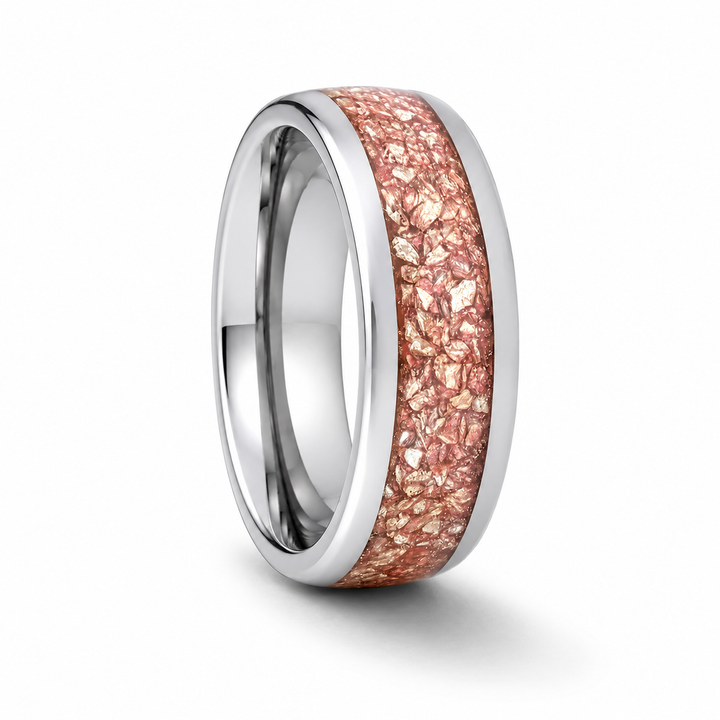
Jonah Morganite
Jonah introduces the gentle pink tones of morganite into a contemporary men's band.
Its gemstone color offers a softer alternative to dark metal and vivid opal inlays.
For someone who appreciates romantic colors but prefers a band-style ring, Jonah provides a distinctive direction.
There is no reason to reserve morganite for one gender. Beautiful color belongs to anyone who loves it.
Explore Jonah →Warm Gold and Natural Green
Changing the metal color around a gemstone can completely transform its appearance.
Green moss agate paired with warm gold-toned metal creates a different impression from the same gemstone surrounded by dark or silver-toned finishes.
For someone who enjoys warm jewelry colors, that contrast can be especially appealing.
It also provides an elegant way for couples to choose rings with a shared gemstone theme while selecting different metal colors.
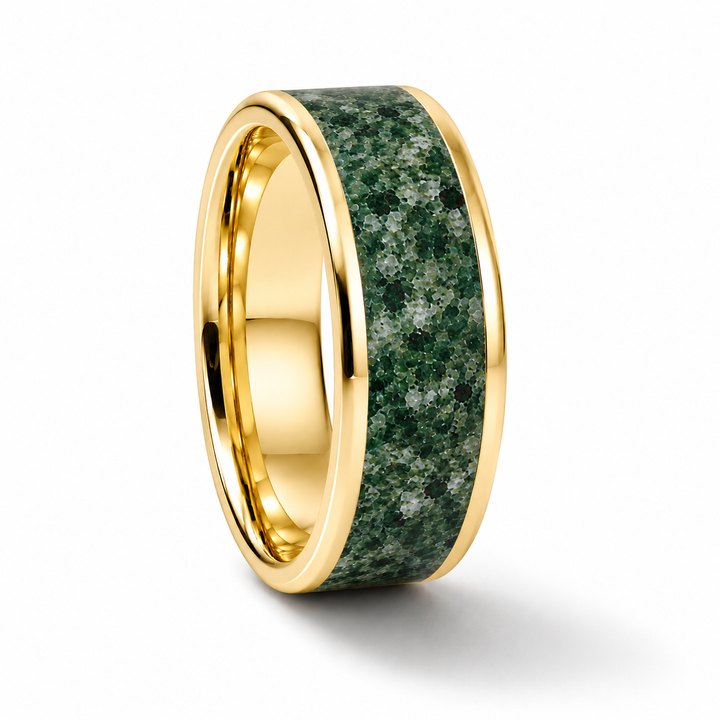
Paul Green Moss Agate — Gold
Paul combines green moss agate with a warm gold-toned band design.
The contrast between the natural green gemstone and gold finish creates a different aesthetic from darker moss agate rings.
For someone who prefers warm metal colors, Paul offers a beautiful nature-inspired option.
It can also coordinate with a partner's moss agate ring in another finish without requiring the designs to be identical.
Explore Paul →Not Every Ring Needs a Gemstone
Although colorful inlays create striking designs, some people genuinely prefer the simplicity of metal.
A silver-toned tungsten band can feel clean, modern, and understated.
It may also be a practical aesthetic choice for someone who regularly wears a watch or other minimalist accessories.
Choosing something simple is just as valid as choosing a dramatic gemstone design.
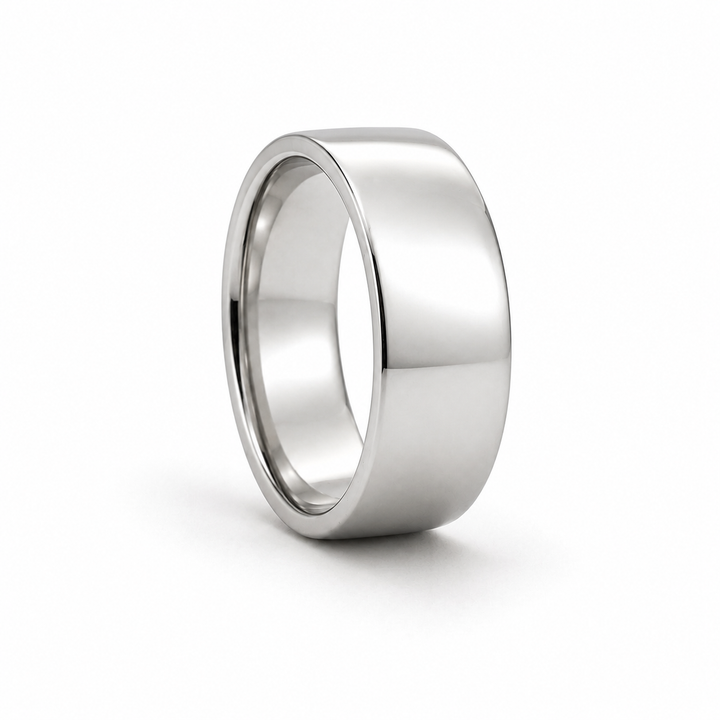
Troy Silver Tungsten
Troy offers a clean silver-toned tungsten carbide design.
Its understated appearance makes it appealing to someone who prefers simple jewelry without colorful inlays.
For couples with different tastes, Troy can also complement a more elaborate ring worn by the other partner.
Unisex style includes the freedom to choose simplicity just as much as the freedom to choose bold color.
Explore Troy →Choosing a Ring for Yourself
If you are shopping for yourself, begin with your existing accessories.
Do you normally wear gold or silver? Are you drawn to bright gemstones or neutral finishes? Do you prefer delicate proportions or substantial jewelry?
Consider your lifestyle as well. A ring that looks beautiful in a photograph should also feel comfortable during the activities you perform regularly.
If you have never worn an 8 mm band, it may be helpful to try that width before ordering.
Wider bands can feel different from narrow ones, and comfort depends on finger proportions, the interior profile of the ring, and personal preference.
Choosing Rings for a Couple
Couples do not need identical rings to express a shared commitment.
One partner may prefer a narrow red opal band while the other chooses a wider version. Another couple might coordinate through moss agate but select different metal finishes.
Some couples may love completely different materials: one chooses whiskey barrel wood while the other selects a celestial-inspired blue band.
The relationship between the rings can be as subtle or as obvious as the couple wants.
What matters is that both people enjoy the jewelry they will wear.
Comfort, Sizing, and Everyday Wear
Band width is only one factor in comfort. Ring size, knuckle shape, interior profile, and daily activities also influence how a ring feels.
Accurate sizing is particularly important with tungsten carbide because it generally cannot be resized like many traditional precious-metal bands.
Tungsten carbide is highly resistant to surface scratching, but it can fracture under certain impacts.
Decorative inlays, including opal, wood, and other materials, may have different care requirements from the surrounding metal.
Avoid harsh chemicals, unnecessary abrasion, and activities that could damage the ring. Remove jewelry during work or recreation where a ring could become caught or create a safety hazard.
The Freedom to Wear What You Love
There is no universal rule that assigns narrow rings to one gender and wide rings to another.
There is no requirement that pink gemstones be delicate, that black metal be masculine, or that unisex jewelry be plain.
Someone may love a 4 mm wood band because it feels comfortable. Another person may choose an 8 mm red opal ring because the vivid color deserves more space.
Someone else may prefer a romantic morganite band, a dark hammered finish, or the luminous blue of a celestial design.
All of those choices are valid expressions of personal style.
The most meaningful ring is not the one that follows a category. It is the one that feels like it belongs to you.
Related Posts

The friendship and sisterhood journal - The Bonds We Choose.

Kherish Jewelry · Christmas 2026 ✦ Christmas at the Château

Gothic Fantasy Jewelry: Romance After Dark

Moss Agate Engagement Rings: A Love Story Written in Nature

Find a Ring That Tells Your Story - Alternative Romance at Kherish Jewelry

Alexandrite Jewelry: Color-Changing Beauty, Romantic Rings, and Meaningful Gifts


