
Alexandrite: The Rare Gemstone That Changes With the Light
Few gemstones make their personality as obvious as alexandrite.
In one light it can appear green, blue-green or teal. Move into warmer illumination and violet, purple, reddish or plum tones can suddenly become more prominent.
That natural relationship with changing light is the reason alexandrite has fascinated collectors for nearly two centuries and why the gemstone has accumulated so much symbolism around transformation, balance, adaptability and change.
It is also one of June's birthstones, an exceptionally durable jewelry stone, and one of the rarest members of the chrysoberyl mineral family.
The essential gemstone facts
Mohs hardness
Alexandrite is unusually durable for a colored gemstone, making it well suited to rings and jewelry intended for regular wear.
Birthstone
Alexandrite shares June birthstone status with pearl and moonstone.
Historic discovery
Important alexandrite deposits were discovered in Russia's Ural Mountains in the nineteenth century.
Alexandrite belongs to the chrysoberyl mineral family rather than the beryl family that contains emerald and aquamarine.
Its chemical composition is BeAl₂O₄. Trace elements interacting with its crystal structure create the distinctive color-change phenomenon.
Fine natural alexandrite traditionally displays green to bluish-green tones in daylight or fluorescent illumination and red to purplish-red under warmer incandescent light.
| Property | Alexandrite |
|---|---|
| Mineral | Chrysoberyl |
| Chemistry | BeAl₂O₄ |
| Mohs hardness | 8.5 |
| Signature feature | Color change under different lighting conditions |
| Typical daylight color | Green to bluish green |
| Typical warm-light color | Red to purplish red |
| Birthstone | June |
| Traditional anniversary | 55th wedding anniversary |
The stone does not physically change. The light reaching your eyes does.
Alexandrite absorbs portions of visible light in an unusual way. Because daylight and incandescent light contain different proportions of wavelengths, the color your eye perceives changes with the illumination.
Green and teal
Daylight and many fluorescent sources contain more blue and green wavelengths, allowing cooler tones to dominate.
Purple and red
Warmer incandescent illumination contains proportionally more red, allowing the warmer side of alexandrite's spectrum to become visible.
Teal, violet and everything between
Modern indoor environments often combine several light sources, so alexandrite may show complex intermediate shades instead of one dramatic green-to-red switch.
Important: not every alexandrite shows the exact same colors or the same strength of change. The quality, chemistry, cut, lighting and individual stone all influence what you see.
It reacts visibly to its environment
Walk from daylight into a warmly lit room and the gemstone can appear to become a completely different color.
Different facets reveal different tones
Alexandrite is pleochroic, meaning different colors can also be visible from different crystallographic directions.
Fine material is uncommon
Strong natural color change combined with desirable clarity, saturation and size makes fine alexandrite especially rare.
June has three birthstones, but alexandrite may be the most dramatic.
Alexandrite joins pearl and moonstone as an official June birthstone.
Pearl is valued for soft luster. Moonstone is loved for floating light and adularescence. Alexandrite offers something entirely different: visible color change.
That makes it especially meaningful for someone born in June who prefers a gemstone with strong color and an unusual visual personality.
| June Birthstone | Signature Look | Personality |
|---|---|---|
| Alexandrite | Color change | Dynamic, rare, mysterious |
| Moonstone | Floating glow | Dreamy, ethereal, soft |
| Pearl | Natural luster | Classic, elegant, timeless |
The stone's green and red appearance was particularly striking in nineteenth-century Russia because those colors echoed the military colors of Imperial Russia.
The original Russian deposits eventually became depleted. Alexandrite has since been found in places including Brazil, Sri Lanka and parts of East Africa.
Fine stones with a vivid, balanced color change remain scarce, especially in larger sizes.
A stone of transformation, balance and changing perspective
Alexandrite has accumulated modern metaphysical associations because of its dramatic color change.
These meanings belong to spiritual and crystal-healing traditions. They are symbolic beliefs, not scientifically demonstrated medical or psychological effects.
Change without losing yourself
Because one gemstone can reveal several different colors, alexandrite is often used symbolically to represent transformation, growth and the ability to move through change.
Two sides held together
Green and red, cool and warm, daylight and lamplight: spiritual traditions often interpret alexandrite's dual appearance as a symbol of balance between seemingly opposite parts of life.
Seeing things differently
Some metaphysical traditions associate alexandrite with intuition, self-awareness and the ability to reconsider a situation from another perspective.
A traditional good-fortune stone
Alexandrite has also developed a reputation in crystal lore as a stone connected with luck, opportunity and favorable change.
More than one answer
Its changing appearance has led some spiritual traditions to connect alexandrite with imagination, creativity and flexible thinking.
Becoming something new
Because its appearance shifts so dramatically, alexandrite is often chosen symbolically for new chapters, milestones and personal reinvention.
Spiritual meaning is personal. Alexandrite does not need a metaphysical meaning to be special. Some people choose it for birthstone tradition, some for color change, some for rarity, and others because the symbolism of transformation feels meaningful to them.
Traditional and modern associations
| Association | Why It Became Connected to Alexandrite |
|---|---|
| Transformation | The gemstone visibly changes appearance in different light. |
| Balance | It contains both cool and warm color personalities. |
| Adaptability | The same stone responds differently to changing surroundings. |
| Luck | Modern gemstone lore often treats rare alexandrite as a good-fortune stone. |
| Creativity | Its multiple visual identities have inspired associations with imagination and flexible thinking. |
| Love & Partnership | Its dual nature is sometimes interpreted as two different energies existing together harmoniously. |
| New Beginnings | The visual transformation makes it a natural symbolic gift for major life changes. |
| Durability Question | Alexandrite |
|---|---|
| Mohs hardness | 8.5 |
| Scratch resistance | Very good for a colored gemstone |
| Toughness | Excellent |
| Cleavage | None |
| Suitable for rings? | Yes |
| Suitable for regular wear? | Yes, with normal fine-jewelry care |
| Impact proof? | No gemstone is completely impact proof |
Strong does not mean maintenance-free.
Alexandrite is durable, but the gemstone is only one part of a ring. Prongs, accent stones and metal finishes still benefit from gentle care.
Warm soapy water
Warm water with mild soap is a safe routine cleaning method for alexandrite jewelry.
Use a soft brush
Gently clean underneath the stone and around the setting with a soft toothbrush to remove lotion and everyday residue.
Pat dry completely
Use a soft lint-free cloth and allow the piece to dry before storing.
GIA notes that ultrasonic and steam cleaning are generally safe for untreated alexandrite. If a gemstone has fractures or has been fracture-filled, warm soapy water is the safer choice.
What matters most when evaluating the stone?
| Quality Factor | What to Look For |
|---|---|
| Color Change | The strength and completeness of the change between cooler and warmer light sources. |
| Color | Strong green or bluish-green daylight tones and red or purplish-red warmer tones are traditionally prized. |
| Saturation | Richer, more vivid colors generally create a stronger visual effect. |
| Clarity | Fine alexandrite often has relatively few distracting inclusions. |
| Cut | Cutters orient the stone carefully to maximize attractive color and color change. |
| Carat Weight | Large fine-quality natural stones are particularly rare and can rise sharply in value. |
Natural alexandrite forms in the earth and is exceptionally rare. Laboratory-grown alexandrite is produced by people but can share essentially the same chemical, physical and optical properties as its natural counterpart.
Other materials can imitate the appearance or color-change effect without actually being alexandrite.
GIA specifically notes that the term “alexandrite sapphire” is often used for color-change laboratory-grown sapphire rather than genuine chrysoberyl alexandrite.
Shopping tip: read the material description carefully. “Alexandrite,” “laboratory-grown alexandrite,” “color-change sapphire” and “alexandrite-effect stone” are not interchangeable terms.
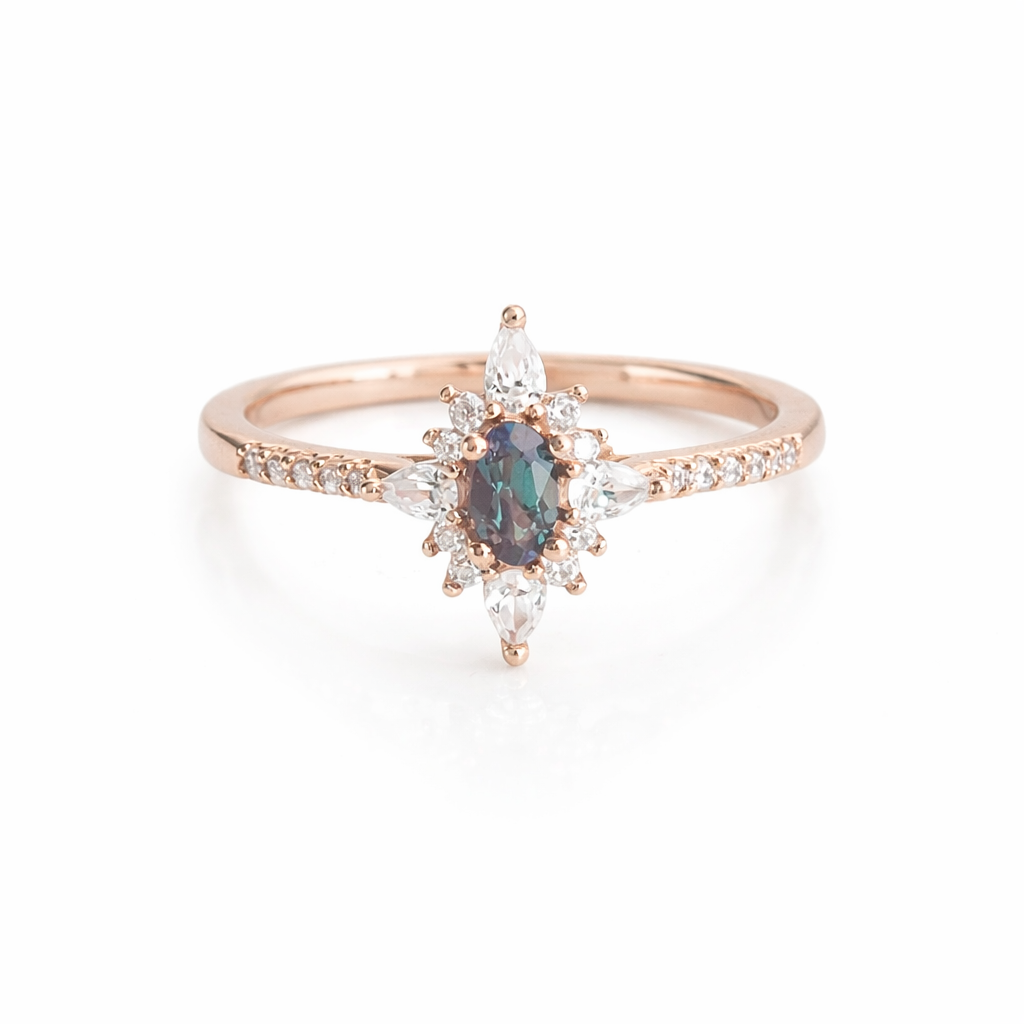
Zoe Alexandrite Ring
An oval color-changing center surrounded by bright pear and round accents gives Zoe a romantic, celestial-inspired silhouette.
View Zoe
Fia Alexandrite Ring
An ornate oval setting gives the color-changing center a vintage and heirloom-inspired personality.
View Fia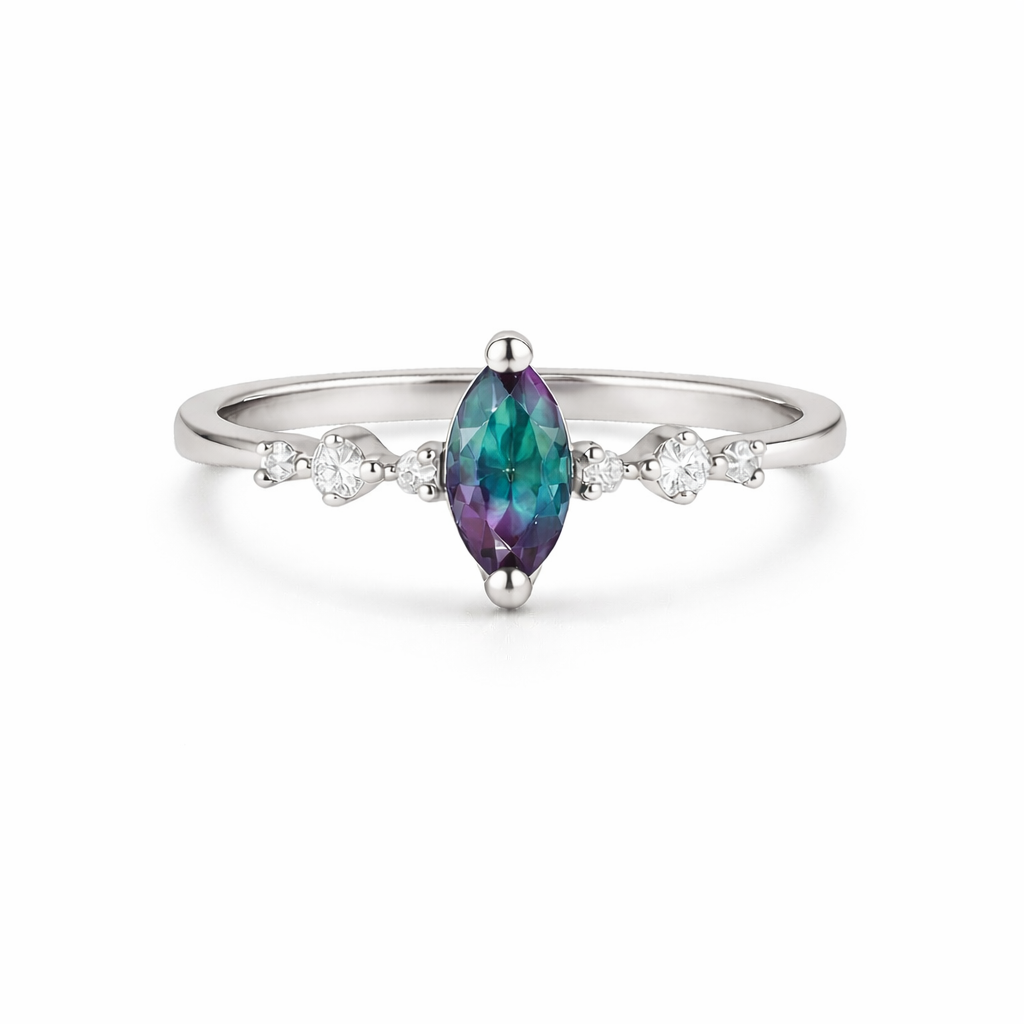
Ava Alexandrite Ring
A 0.75-carat marquise alexandrite creates a slimmer, lighter interpretation with delicate crystal accents.
View Ava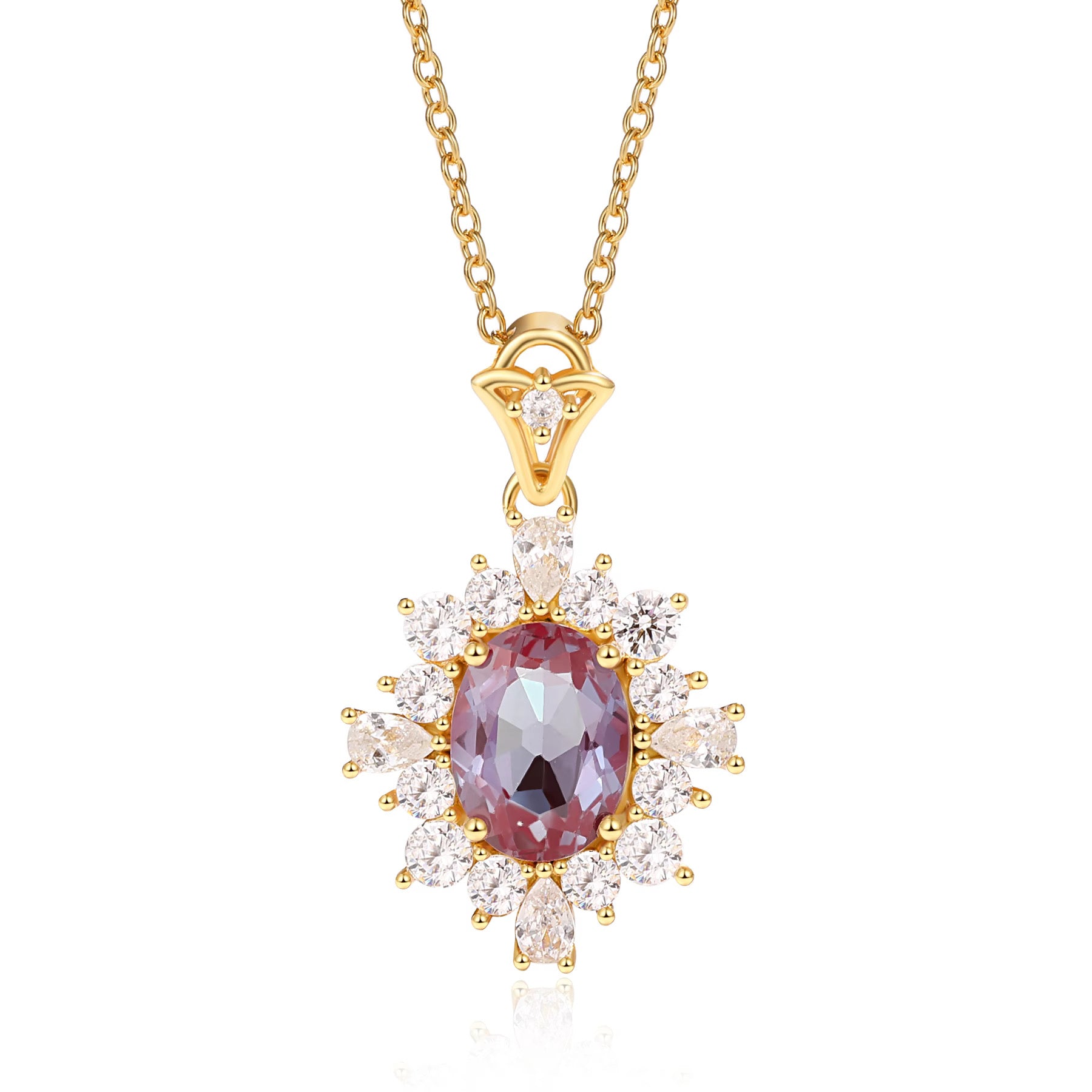
Phi Alexandrite Necklace
A large oval color-changing center surrounded by bright accents turns alexandrite into a statement pendant rather than a bridal ring.
View Phi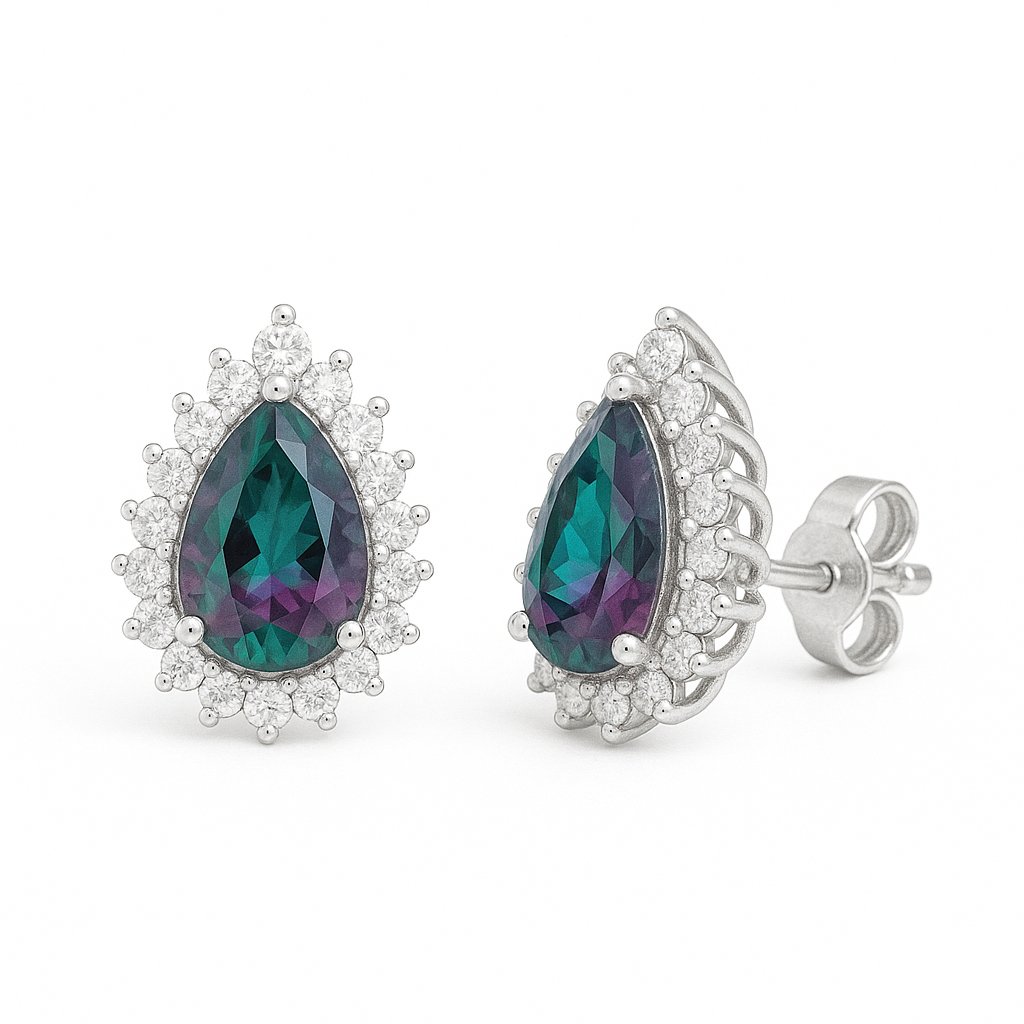
Ina Alexandrite Earrings
Pear-shaped alexandrite earrings let the color-change effect become visible near the face, where changing indoor and outdoor lighting can make the stones especially interesting.
View Ina
Mia Alexandrite Ring
An ornate oval center and elaborate bright halo create one of the collection's more dramatic engagement-ring silhouettes.
View Mia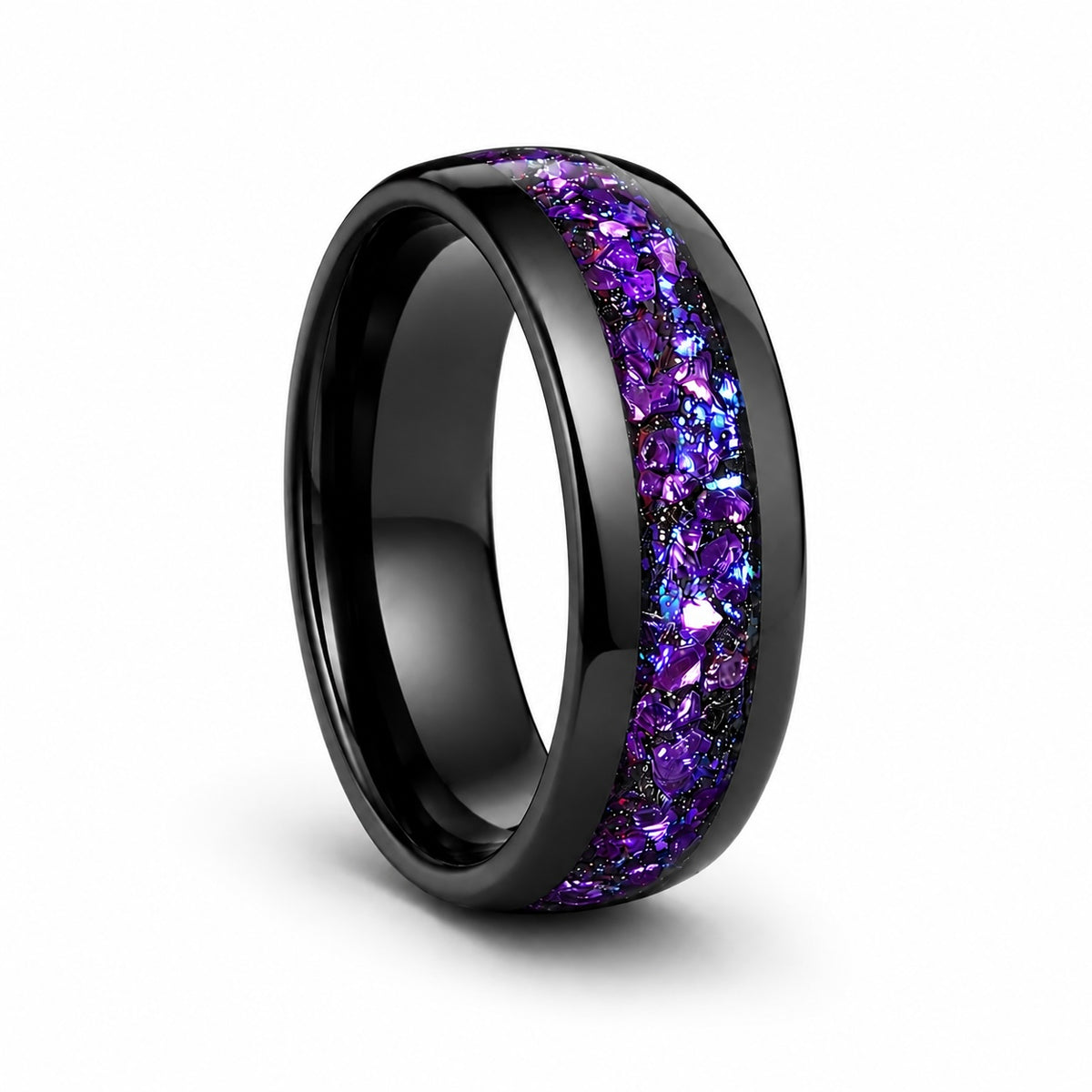
Esme Galaxy Alexandrite Ring
Alexandrite color is reinterpreted through a galaxy-inspired tungsten band for a completely different, darker direction.
View Esme
Mensi Alexandrite Wedding Band
Crushed gemstone color and gold-leaf details bring alexandrite into a low-profile black wedding band rather than a raised center-stone ring.
View MensiUnusual gemstones should not be limited to usual sizes.
The current Kherish Alexandrite collection includes unusually broad size filtering, from approximately US 3.5 through 16.25 across different designs.
Many women's Alexandrite rings include quarter-size choices, while men's bands extend into significantly larger sizes.
Zoe, for example, currently offers sizes from 3.5 through 14, while the wider Alexandrite collection includes extended men's sizing beyond that range.
Alexandrite is particularly well suited to engagement rings because it combines rarity, durability and visual individuality.
Its hardness of 8.5 and excellent toughness make it more suitable for frequent ring wear than many softer colored gemstones.
Symbolically, the changing color also makes alexandrite an appealing engagement stone: two colors, one gemstone, changing circumstances without losing the underlying identity.
For a relationship ring: alexandrite can represent adaptability, partnership and growing together while remaining individually recognizable.
The metal changes which colors feel strongest.
Cool and crisp
Silver emphasizes teal, blue-green and violet tones and creates a bright neutral frame around the stone.
Warm and romantic
Rose gold echoes alexandrite's plum, red and violet side while contrasting beautifully with cooler teal flashes.
Rich and vintage inspired
Yellow gold gives the gemstone a warmer, more traditional frame and works especially well with ornate or antique-inspired settings.
More occasions than June birthdays
Birthstone jewelry
Alexandrite gives a June birthstone gift an especially unusual color-changing personality.
A ring that changes with you
The gemstone's durability and symbolism make it a natural choice for an unconventional engagement ring.
Traditional anniversary gemstone
Alexandrite is traditionally associated with the 55th wedding anniversary.
Transformation
Graduation, a career change, relocation or another new beginning can make its transformation symbolism especially meaningful.
Reinvention
The changing gemstone can symbolize becoming something new without erasing what came before.
You love the stone
Birth month and symbolism are optional. Alexandrite is worth choosing simply because the color change is fascinating.
The questions people ask most
What is alexandrite?
Alexandrite is the rare color-changing variety of the mineral chrysoberyl.
Why does alexandrite change color?
Its crystal structure absorbs light in a way that makes different colors dominate under different light sources.
What colors can alexandrite show?
Fine alexandrite is famous for green to bluish-green colors in daylight and red to purplish-red colors under warmer incandescent light. Individual stones can also show teal, violet and intermediate shades.
Does every alexandrite change color the same amount?
No. The strength, completeness and colors of the change vary between stones.
Is alexandrite rare?
Yes. Fine natural alexandrite with strong color change is exceptionally rare, particularly in larger sizes.
Is alexandrite a June birthstone?
Yes. Alexandrite shares June birthstone status with pearl and moonstone.
What wedding anniversary is associated with alexandrite?
Alexandrite is traditionally associated with the 55th wedding anniversary.
What is alexandrite's spiritual meaning?
In modern metaphysical traditions, alexandrite is commonly associated with transformation, balance, adaptability, intuition, creativity and luck. These are symbolic spiritual beliefs rather than scientifically proven effects.
Is alexandrite considered a lucky stone?
Some gemstone and crystal traditions treat alexandrite as a symbol of good fortune and positive change. That association belongs to folklore and metaphysical practice rather than gemological science.
How hard is alexandrite?
Alexandrite ranks approximately 8.5 on the Mohs hardness scale.
Is alexandrite good for everyday rings?
Yes. Its high hardness, excellent toughness and lack of cleavage make alexandrite one of the better colored gemstones for rings intended for regular wear.
How should I clean alexandrite?
Warm water, mild soap and a soft brush are safe for routine cleaning. Dry the jewelry thoroughly with a soft lint-free cloth.
Can alexandrite go in an ultrasonic cleaner?
GIA states that ultrasonic and steam cleaning are usually safe for alexandrite. Fracture-filled stones should instead be cleaned only with warm soapy water.
Is alexandrite suitable for an engagement ring?
Yes. Its durability, rarity and color-change effect make it especially suited to alternative engagement jewelry.
What metals look best with alexandrite?
Sterling silver emphasizes the cool teal and violet side, rose gold creates strong warm-versus-cool contrast, and yellow gold gives alexandrite a richer vintage-inspired appearance.
Does Kherish carry alexandrite outside of women's rings?
Yes. The current Kherish Alexandrite collection includes necklaces, earrings, men's rings, wedding bands and couple's sets in addition to women's rings.
Does Kherish offer extended Alexandrite ring sizing?
Yes. The current Alexandrite collection includes broad sizing across different designs, including quarter sizes and extended men's sizes.
Alexandrite does not ask you to choose one color.
Green in one light. Violet in another. Teal, plum, blue-green and red tones appearing somewhere in between.
Its rarity makes it interesting. Its durability makes it wearable. Its June birthstone history gives it tradition. And its changing appearance has inspired generations of symbolism around transformation, balance and adaptability.
Whether those meanings matter to you or you simply love watching the stone change color, alexandrite is a gemstone that refuses to look exactly the same all day.
Explore the Kherish Alexandrite CollectionAmethyst: Here is everything to know about the February birthstone and how to wear it.
Kite Cut Rings: Why This Geometric Center Stone Is Standing Out in 2026
Related Posts

Halloween Engagement Rings - Dark, Romantic and Completely Personal.

A Thanksgiving Proposal Does Not Need Spring Flowers

A Proposal That Becomes Part of the Family Story - Adding To Tradition

Friendsgiving Proposals - Traditions Can Be Created

Thanksgiving Proposal Questions - The celebration begins naturally.

The Kya Collection Meets New York Fashion Week 2026

Fall Already Looks Like a Fairytale. Choose a Ring That Belongs in It.


