
Kherish Jewelry Guide
Gothic Engagement Rings: A Guide to Dark Romance, Gemstones, Metals & Unconventional Shapes
Gothic engagement rings turn traditional bridal jewelry in a different direction. Instead of relying on one expected look, they use dramatic gemstones, shadowed metals, pointed silhouettes, organic details and unusual cuts to create a ring that feels intensely personal.
Gothic engagement jewelry is sometimes misunderstood as jewelry that simply happens to be black. The style is much broader than that. A Gothic ring can be romantic, botanical, architectural, vintage inspired, celestial, delicate or unapologetically dramatic. What connects these designs is atmosphere. They look as though they belong to a story rather than a jewelry formula.
That makes Gothic engagement rings especially appealing to people who have never identified with the traditional bridal aesthetic. A ring does not need a clear center stone surrounded by a conventional halo to represent commitment. Garnet can replace colorless sparkle. Moss agate can bring a forestlike pattern to the center of a design. Black rutilated quartz can make the inclusions themselves part of the visual language. Coffin, kite and elongated geometric cuts can completely change the character of a ring before the metal or accent stones are even considered.
At Kherish, Gothic fantasy jewelry sits at the intersection of alternative bridal design and fine jewelry. The goal is not to imitate costume jewelry. It is to use unexpected shapes, gemstones and details in a way that can still be worn as meaningful everyday jewelry.
What Defines a Gothic Engagement Ring?
Unusual Shapes
Coffin, kite, marquise and elongated cuts give a ring a more architectural profile.
Deep Gemstone Color
Garnet, ruby, black stones and richly colored gems create depth without depending on traditional bridal white.
Organic Detail
Leaves, vines, pointed accents and flowing bands soften the harder geometry of darker designs.
Atmosphere
A successful Gothic ring creates a mood without needing literal Gothic symbols.
Dark Metals
Why Black Gold Changes the Entire Personality of a Ring
Metal is usually treated as the background of a ring, but in Gothic design it can become one of the strongest visual elements. A dark setting sharpens outlines, increases contrast and makes colored stones appear even more saturated. Garnet against black metal, for example, does not read the same way as garnet against a pale setting. The deep red becomes warmer, darker and more dramatic.
Black metal also changes how accent stones behave visually. Clear accents become points of light against the setting rather than blending into it. This allows even relatively delicate details to remain visible. The contrast is particularly effective in layered ring sets, where separate bands can be distinguished without making the overall stack feel disconnected.
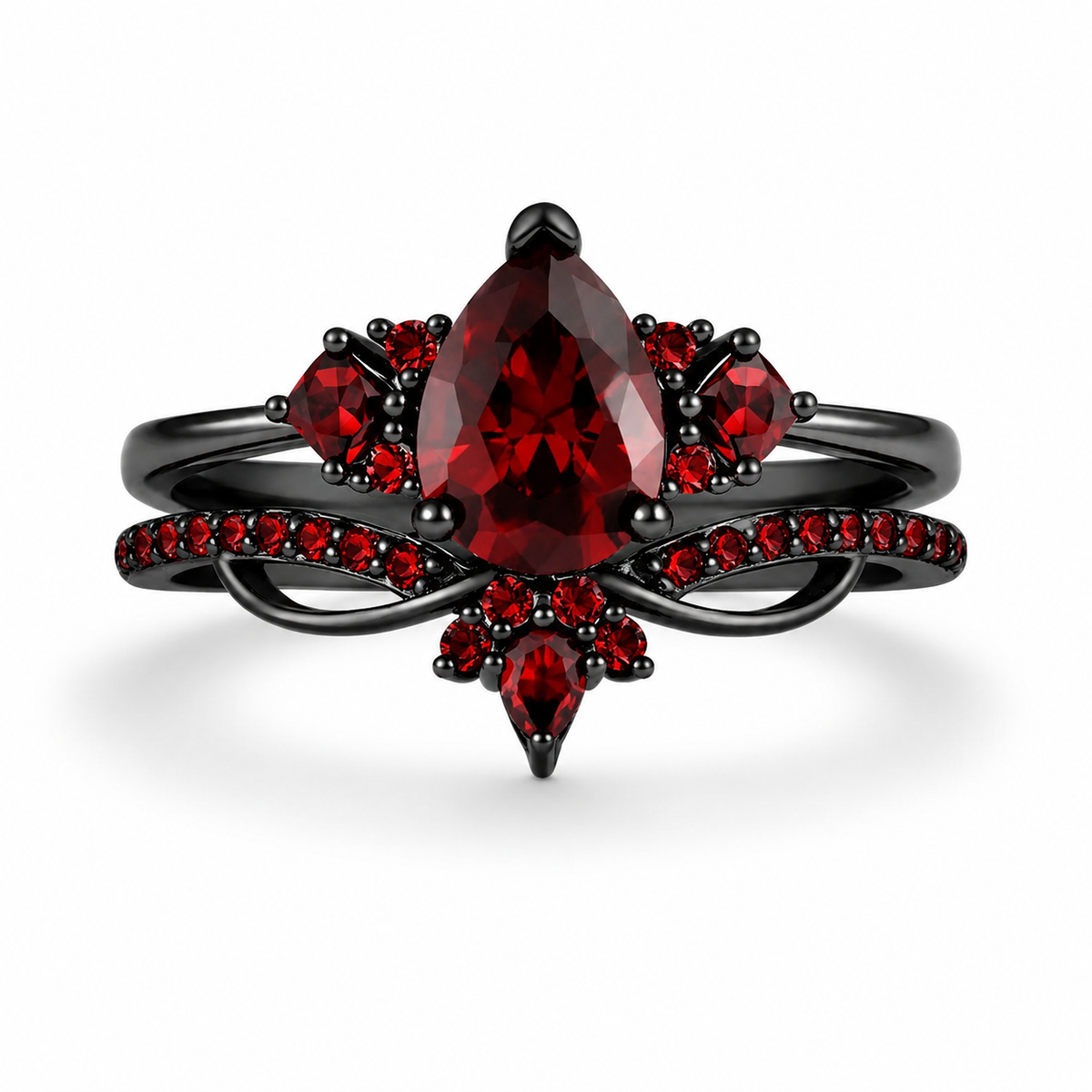
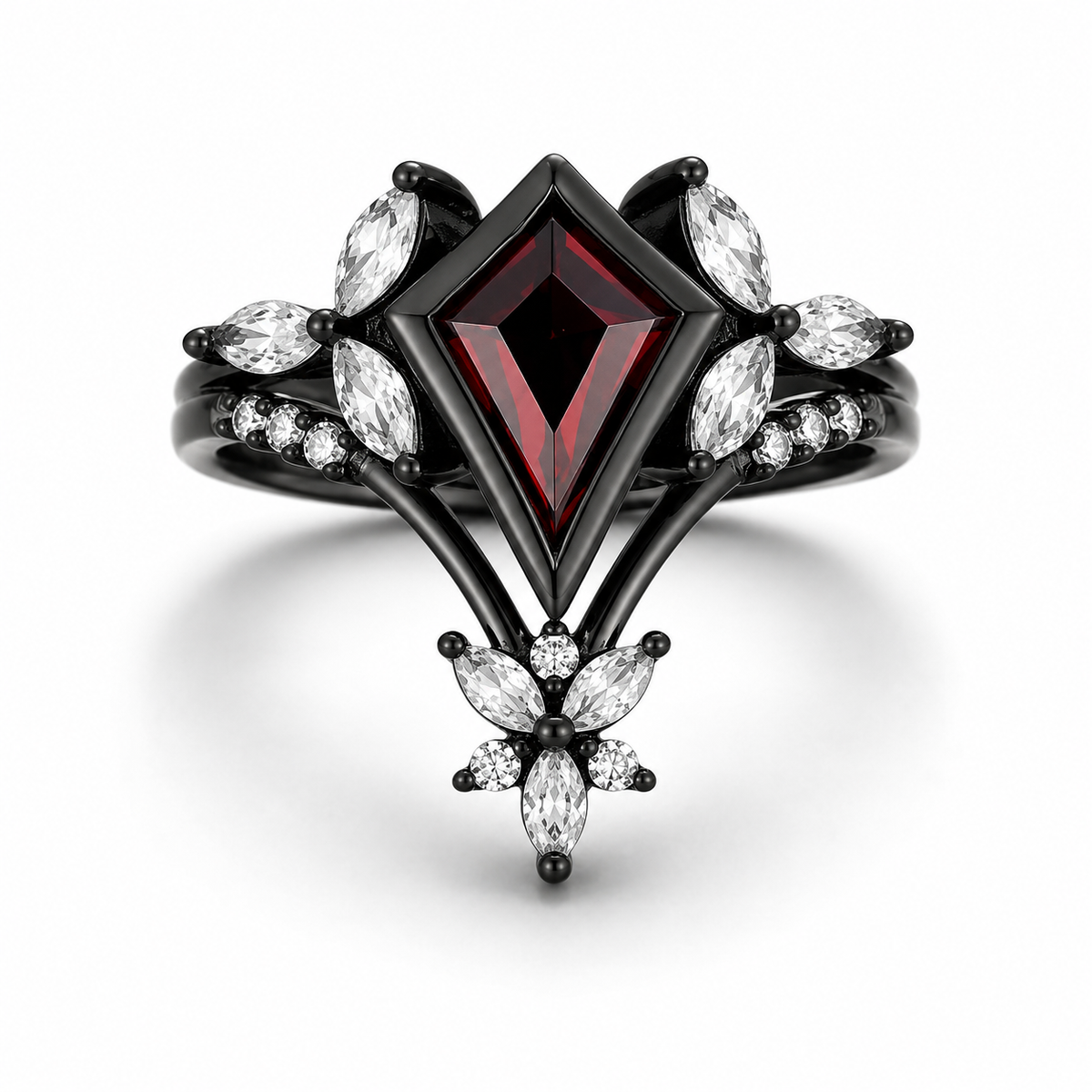
The Rachel and Nora sets demonstrate two different approaches. Rachel uses curves and a pear shaped center to create a flowing silhouette, while Nora uses stronger geometry and a pointed central stone. Both feel Gothic, but they reach that mood through different proportions.
Kherish Gothic Favorite
Rachel Garnet Black Gold Ring Set
Rachel combines a deep garnet center with a black setting and a coordinating curved band. The silhouette is romantic rather than severe. Rounded side stones and the sweeping lower band keep the design fluid while the dark metal gives the entire stack its dramatic edge.
This type of design works well for someone who wants a Gothic engagement ring that still has recognizable bridal balance. The center remains dominant, the bands fit together as a composition, and the darker palette supplies the alternative character.
VIEW RACHELShape Matters
Coffin Cut Rings and the Rise of Architectural Bridal Jewelry
Few gemstone shapes alter the mood of a ring as quickly as a coffin cut. Its long body, narrowing lower section and angular outline immediately separate it from round, oval and cushion cut stones. The shape feels structured and dramatic without requiring a large setting.
The important detail is proportion. Coffin cuts can be narrow and blade like, wide and shield like, or elongated enough to cover a significant portion of the finger. Surrounding details matter just as much. Botanical accents make the shape feel enchanted. Geometric accents emphasize its architecture. A curved wedding band can frame the point and transform the engagement ring into a complete composition.
This is why two rings with coffin cut centers can look entirely unrelated. The cut creates the foundation, while gemstone color, metal and side details establish the personality.


Beyond the Traditional Center Stone
The Gemstone Can Decide Whether a Ring Feels Gothic, Romantic or Enchanted
A gemstone does more than add color. In an alternative engagement ring, it can determine the entire atmosphere. Dark red stones tend to create richness and intensity. Green patterned stones bring an organic quality. Pale warm stones can soften Gothic architecture and push it toward vintage romance.
Garnet
Deep red garnet works naturally with dark metal because both have visual weight. The combination feels rich and romantic without depending on traditional bridal color.
Ruby
Ruby brings a brighter red. In an elongated Gothic setting, it can create a stronger jewel toned focal point while preserving the darker architecture around it.
Moss Agate
Moss agate creates its drama through internal pattern rather than intense color. Every stone has its own branching, organic appearance, making it especially suited to nature inspired fantasy settings.
Black Rutilated Quartz
Dark needlelike inclusions create texture inside the stone itself. Instead of hiding natural variation, the design uses that variation as part of the visual identity.
Morganite
Morganite proves Gothic jewelry does not have to use a dark stone. A pale peach or blush center inside pointed architecture creates contrast between softness and structure.
Pink Sapphire
Pink sapphire can shift between romantic and dramatic depending on its setting. Against black metal and garnet, saturated pink becomes far bolder than it would in a conventional pale setting.
Gothic Meets Botanical
Briellia Moss Agate
Briellia demonstrates how easily the Gothic aesthetic can overlap with nature inspired jewelry. The elongated coffin cut provides the strong architecture, while the moss agate center introduces irregular green patterning that resembles branches, moss or miniature landscapes.
The surrounding marquise accents create leaflike movement on both sides of the center. In rose gold, the result is less stark than black metal and more romantic, but the pointed central silhouette still keeps the ring firmly within fantasy inspired territory.
VIEW BRIELLIA
Not Every Gothic Ring Is Black
Gothic Romance Can Be Soft, Warm and Ornate
One of the most interesting directions in modern Gothic bridal jewelry is the use of soft color inside dark or architectural design language. A ring can have a coffin cut center, pointed framing and vintage detailing while using rose gold or a pale gemstone. The result still feels alternative because shape and ornament are doing the work that color would otherwise provide.
This approach is useful for someone who loves Gothic architecture and fantasy styling but does not want an all black palette. Morganite, moss agate and warm metals can make the design feel romantic and antique inspired rather than severe.


The Complete Silhouette
Why Ring Sets Work So Well With Gothic Designs
Gothic engagement rings frequently use elongated centers, pointed lower edges and wide decorative profiles. A straight wedding band can leave a gap around this type of shape. That is why curved and contoured bands are especially useful in alternative bridal design.
A fitted band does more than solve a practical spacing issue. It becomes part of the visual composition. A V shaped band can echo the point of a coffin cut. A curved band can frame a pear or kite center. Accent stones can continue the color story from the engagement ring into the wedding band so the two pieces look intentionally designed together.
This also provides flexibility. A dramatic engagement ring can be worn alone when a simpler look is wanted. Adding the second band creates a fuller silhouette for weddings, events or days when the complete stack feels right.
Nora: Geometry With a Botanical Counterpoint
Nora centers the design on a pointed garnet framed in black metal, then softens that geometry with marquise shaped accents and a floral inspired lower detail. That contrast is one of the most effective tools in Gothic jewelry design: hard lines paired with organic forms.
The result is dramatic from a distance but much more detailed when viewed closely. That kind of layered design is particularly effective for an engagement ring because it gives the wearer something beyond a single center stone to appreciate over time.
VIEW NORAFinding Your Version
How to Choose a Gothic Engagement Ring You Will Still Want to Wear Years From Now
Start with shape before color.
A ring's silhouette is what you notice first. Decide whether you prefer pointed coffin and kite shapes, elongated stones, flowing botanical forms or something closer to a traditional bridal outline.
Decide how dark you actually want the design to be.
Black metal creates the strongest contrast, but a Gothic ring does not require it. Sterling silver can make the same geometry feel cooler, while rose gold can turn it toward romantic fantasy.
Look at the entire ring, not only the center stone.
Side stones, prongs, band shape and negative space determine how ornate or minimal the finished piece feels. Two rings using the same gemstone can have completely different personalities.
Think about whether you want a set.
If the center stone extends far toward the knuckle or has a pointed lower edge, a fitted band can create a much cleaner stack than trying to match the engagement ring later with a straight band.
Choose the ring because it feels like you.
Engagement jewelry has become far less dependent on a single definition of what a bridal ring should look like. A dark gemstone, unusual shape or fantasy inspired setting can be just as meaningful as a traditional design when it reflects the person wearing it.
Gothic Engagement Ring FAQ
Does a Gothic engagement ring have to be black?
No. Gothic style can come from silhouette, gemstone shape, setting details or architectural design. Morganite and moss agate can look Gothic when paired with elongated cuts and dramatic settings.
What gemstone colors work especially well?
Deep reds, forest greens, black stones and unusual included gemstones naturally suit darker jewelry, but pale stones can create a striking contrast inside a Gothic setting.
What is a coffin cut?
A coffin cut is an elongated geometric shape with angled shoulders and a narrowed lower portion. Its distinctive outline is one reason it has become strongly associated with Gothic and alternative jewelry.
Can Gothic engagement rings still look elegant?
Absolutely. Gothic design is not synonymous with oversized or heavily decorated jewelry. Fine proportions, balanced stone placement and carefully coordinated bands can create a dramatic ring that remains refined.
Where can I see more Kherish Gothic designs?
The complete Gothic Fantasy Collection brings together Kherish rings and ring sets using darker gemstones, unconventional cuts, fantasy inspired details and alternative bridal styling.
Alternative Fine Jewelry
Your Engagement Ring Does Not Have to Follow Someone Else's Tradition
Gothic bridal jewelry gives you room to choose color, symbolism, shape and atmosphere for yourself. Whether that means garnet and black gold, patterned moss agate, an architectural coffin cut or something softer with a darker edge, the most successful engagement ring is the one that feels connected to the person who will actually wear it.
Explore More Gothic Kherish Rings
Related Posts

Kai vs. Katharina: Soft Botanical Curves or a Long Hexagon Moss Agate Center?

Abalone Jewelry makes an especially easy color gift.

Anniversary Jewelry: A Gift for the Story You Already Share

Amethyst Collection - Romantic, Vintage, Celestial and Alternative Jewelry

Your Ear Piercing Is Tiny. That Does Not Mean It Has To Be Ordinary.

Kite Cut Engagement Rings: Nature and Fantasy Inspired for Fall 2026


