
The Fig Ring: A Twisted-Band Classic Reimagined Through Gemstone Color
Fig is the kind of ring that feels familiar at first glance and becomes more interesting the longer you look at it. An elongated oval center creates the traditional focal point, while marquise and round crystal accents spread outward into a beautifully balanced side-stone design.
Then comes the detail that changes everything: the twisted band. Instead of ending in a plain polished shank, Fig continues the movement around the finger through rope-like metalwork. It gives a classic oval gemstone ring more texture, more romance and just enough vintage character to feel distinctive.
The current Fig collection keeps that same recognizable silhouette across White Fire Opal, Sapphire and Alexandrite, allowing the gemstone and metal to completely change the personality without changing what makes Fig unmistakably Fig.
Explore the Fig Ring Collection
Why the Design Feels Romantic Without Becoming Overly Ornate
Fig begins with an oval center, one of jewelry's most enduring gemstone silhouettes. An oval gives the center visible length, but its completely curved outline keeps the design soft.
On each side, marquise and round crystal accents create a gradual transition from the larger center stone into the band. Rather than surrounding the gemstone with a complete halo, the accents sit primarily along the sides and allow the top and bottom of the center to remain visually open.
That creates an important balance. Fig has more detail than a solitaire but does not bury the center inside a large frame. The gemstone remains the focus.
Fig is detailed where it matters and restrained where the center stone needs room to shine.
The oval supplies classic structure, the marquise stones add graceful movement, the round accents add sparkle and the twisted band finishes the design with texture.
Why a Twisted Band Changes a Classic Gemstone Ring
A plain band creates a clean line away from the setting. Fig deliberately does something different. The twisting detail introduces texture across the entire visible band, keeping the design interesting even after the eye moves away from the center.
The Band Never Feels Flat
The rope-like twist creates visual motion and keeps the ring from looking static from the front.
Softer Than Hard Geometry
Curving metal naturally complements the oval center and leaf-like marquise accents.
Detail Without a Heavy Setting
Textured metal gives Fig some of the personality associated with antique-inspired jewelry without adding a large halo or elaborate filigree.
The Design Travels Around the Finger
Fig does not feel like a gemstone setting attached to an unrelated plain band. The band is part of the design itself.
Why Fig Feels Classic Without Looking Generic
Fig uses several elements that have remained popular in fine jewelry for generations: an oval center, balanced side stones, symmetry and a narrow band that keeps the gemstone visually dominant.
What keeps it from becoming predictable is the way those elements are combined. Marquise accents introduce a botanical suggestion. The twisted band creates texture. Alternative gemstones replace the assumption that a traditional silhouette needs a colorless center.
Oval Center Stone
Elongated, curved and symmetrical, the oval gives Fig traditional fine-jewelry proportions.
Marquise Accents
The pointed side stones resemble small leaves and add graceful movement beside the center.
Twisted Metal
Texture keeps the band visually interesting without making the ring bulky.
Gemstone Color
Opal, Sapphire and Alexandrite allow a timeless setting to reflect very different personal styles.
Six Versions, One Recognizable Design
The current Fig collection contains six listings: two White Fire Opal versions, two Sapphire versions and two Alexandrite versions. The gemstone and metal change, while the oval center, marquise-and-round accents and twisted band remain the visual signature.
Fig White Fire Opal Sterling Silver
This is Fig at its softest and most luminous. The pale natural Opal center allows flashes of shifting color to become the focal point while Sterling Silver keeps the rest of the palette cool and bright.
The white-metal setting makes the crystal accents almost blend into the band, allowing the Opal to appear especially light.
View Fig Opal Silver
Fig White Fire Opal Gold
Change only the metal and Fig takes on an entirely different personality. Warm Gold gives the white Opal more contrast and makes the twisted band considerably more visible.
This version feels warmer, richer and slightly more vintage inspired while retaining the same luminous center.
View Fig Opal Gold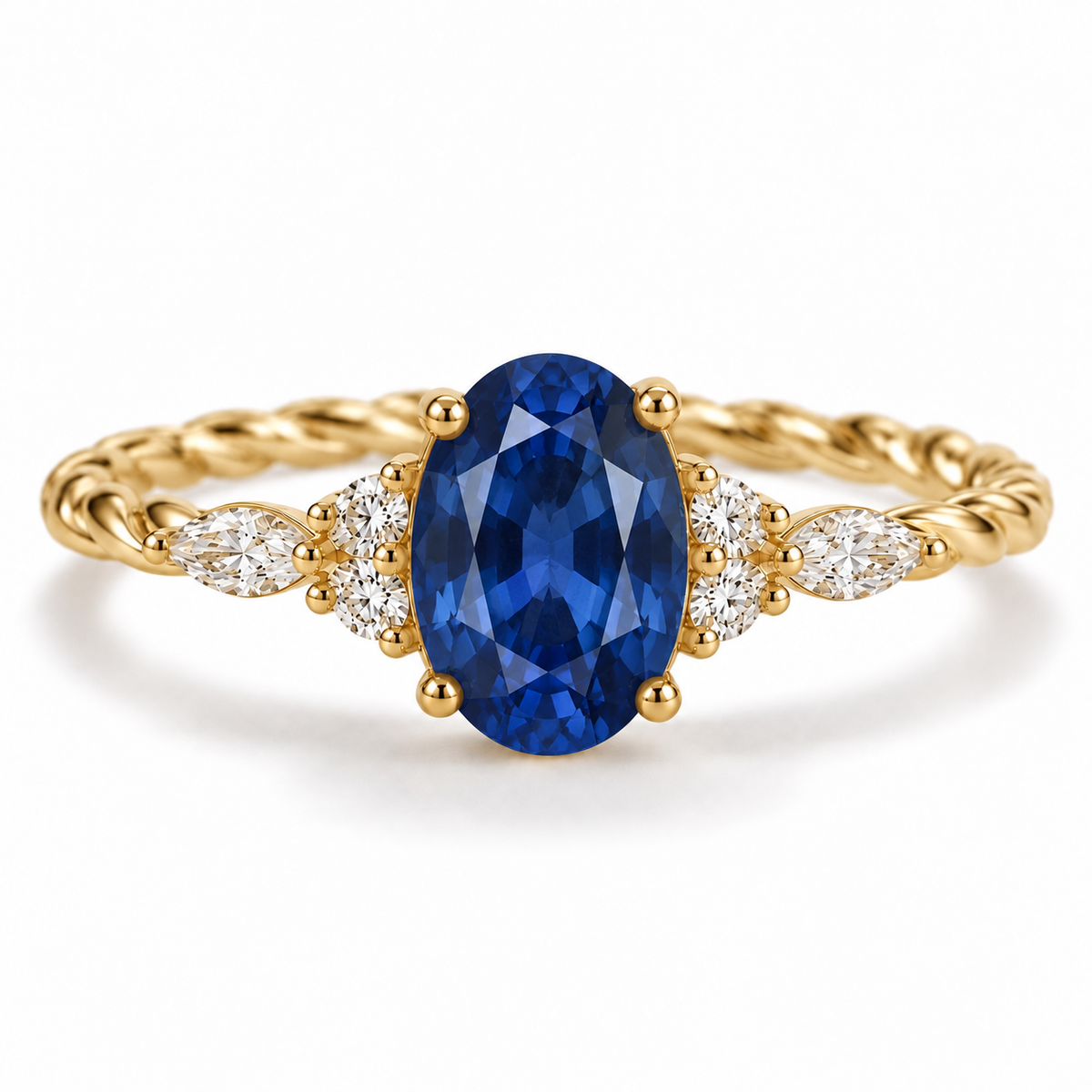
Fig Sapphire Gold
Deep blue Sapphire makes the Fig silhouette feel especially classic. The saturated oval center creates strong contrast against warm Gold, while the bright marquise and round crystals make the blue appear even richer.
It is one of the strongest Fig choices for someone who loves traditional colored-gemstone jewelry.
View Fig Sapphire Gold
Fig Sapphire Sterling Silver
Sterling Silver cools the entire Sapphire design and creates a blue-and-white palette that feels crisp, polished and slightly more contemporary than the Gold version.
The center remains dramatic, but the cool metal allows the surrounding crystals and twisted texture to feel lighter.
View Fig Sapphire Silver
Fig Alexandrite Rose Gold
Alexandrite gives Fig its most unusual gemstone personality. Teal, green and purple tones create a center that feels considerably less predictable than a single-color stone.
Rose Gold adds warmth around those cooler jewel tones, creating a romantic contrast that makes this one of the most distinctive versions in the collection.
View Fig Alexandrite Rose Gold
Fig Alexandrite Gold
Yellow Gold gives Alexandrite a richer, more heirloom-inspired frame. The warm metal highlights the twisted texture while the multitone center remains unmistakably modern.
It is a particularly good example of what Fig does best: classic structure reimagined through an unconventional gemstone.
View Fig Alexandrite GoldThe Silhouette Stays the Same. The Personality Does Not.
Dreamy & Luminous
Choose Opal if you love pale gemstones, shifting color, fantasy-inspired softness and a center that looks different as the light changes.
Classic & Regal
Choose Sapphire if you want the most traditional colored-gemstone interpretation of Fig with a rich blue center and strong contrast.
Mysterious & Unconventional
Choose Alexandrite if you want color that feels less predictable, with green, teal and purple tones giving the center more visual complexity.
Fig White Fire Opal Turns the Oval Into a Luminous Centerpiece
Opal works beautifully with Fig because the setting gives the center plenty of open visual space. The color does not have to compete with a complete halo wrapped tightly around it.
Instead, the smaller crystals sit primarily along the sides, functioning almost like punctuation around the center. Marquise stones lengthen the composition while the twisted band gives the entire piece a softer romantic finish.
Sterling Silver keeps the palette cool and ethereal. Gold Vermeil creates stronger contrast and brings out the vintage side of the design.
Fig Sapphire Shows How Easily the Design Becomes Heirloom Inspired
Sapphire changes the entire visual weight of Fig. Instead of the soft luminosity of Opal, the eye immediately lands on a deep, saturated blue oval.
The clear side stones act as contrast rather than competing color, while the twisted band prevents the otherwise traditional blue gemstone setting from becoming too formal.
In Gold, the design feels warmer and more vintage influenced. In Sterling Silver, the same Sapphire becomes cooler, cleaner and slightly more contemporary.
Fig Alexandrite Is Where Traditional Structure Meets Fantasy Color
Alexandrite is particularly well suited to a design like Fig because the ring itself provides familiar structure around an unusual center.
The oval cut, balanced crystals and symmetrical side arrangement keep the silhouette elegant. The Alexandrite then introduces green, teal and violet tones that move the design away from a predictable traditional gemstone ring.
Rose Gold emphasizes romance. Yellow Gold gives the center a warmer heirloom-style setting. In either metal, this is the Fig for someone who loves classic jewelry but does not want a classic color.
Fig Alexandrite works because the setting is timeless enough to support a gemstone that feels completely individual.
Silver, Gold or Rose Gold Changes More Than the Band Color
Traditional Enough for Bridal Jewelry, Different Enough to Feel Personal
Fig works naturally as an alternative engagement ring because the basic architecture remains familiar: one central gemstone, symmetrical side stones and a slender band.
The difference lies in the details. The twisted metal introduces texture, the marquise accents create a subtle botanical influence and the colored gemstone makes the center personal.
A Clear Focal Center
Fig has enough central presence to read immediately as a meaningful engagement-style ring.
Color Instead of Convention
Opal, Sapphire and Alexandrite allow the wearer to choose a gemstone based on personal style rather than one formula.
Twisted Band Texture
The textured band adds softness and detail without requiring an oversized setting.
Balanced Symmetry
Matching side stones and an oval center keep the design visually balanced even when the gemstone choice is unusual.
Why Fig Also Works as a Promise Ring, Anniversary Ring or Meaningful Gift
Meaningful Presence
Fig looks substantial and special without requiring the wearer to define it exclusively as an engagement ring.
Choose a New Gemstone
Colored centers make it easy to select a ring based on a favorite stone, color or shared meaning.
Personal Color
Sapphire or Alexandrite can connect to birthstone traditions, while Opal offers an especially luminous gift option.
Jewelry Does Not Need an Occasion
The twisted band and gemstone center make Fig decorative enough to wear simply because the design feels right.
Choose by Personality
You Want Softness & Fantasy
You love luminous gemstones, subtle shifting color, romantic styling and a center that never looks exactly the same in every light.
You Want Rich Classic Color
You love deep royal blue, traditional colored-stone jewelry and a design that feels elegant without relying on a colorless center.
You Want the Most Unusual Fig
You are drawn to teal, green and violet tones and want the classic Fig silhouette paired with a less predictable gemstone.
You Love Detail Without a Full Halo
You want more personality than a plain solitaire but still want the center gemstone to remain clearly dominant.
A Detailed Ring Should Still Be Made for More Hands
Current Fig product descriptions offer extensive quarter and half sizing, including sizes from approximately 3.75 through 14.25 depending on the individual gemstone and metal option.
Quarter Sizes Matter
A ring intended for engagements, anniversaries or everyday wear should fit comfortably. Fig listings include quarter-size increments across much of their ranges instead of restricting shoppers to whole sizes.
Exact availability can vary between gemstone and metal versions, so use the individual Fig product listing when selecting the final size.
The Fig Ring, Explained
What is the Fig Ring?
Fig is a Kherish oval gemstone ring featuring marquise and round crystal accents along each side and distinctive twisted-band detailing.
What gemstones does Fig currently come in?
The current Fig collection includes White Fire Opal, Sapphire and Alexandrite.
How many Fig rings are currently in the collection?
The live Fig collection currently contains six product listings: two White Fire Opal versions, two Sapphire versions and two Alexandrite versions.
What shape is the Fig center stone?
The Fig center stone is an elongated oval cut.
What shape are the Fig accent stones?
Fig uses both marquise and round clear crystal accents, creating a balanced design on either side of the oval center.
What makes the Fig band different?
Instead of using a completely plain shank, Fig incorporates twisted-band detailing that gives the metal visible texture around the finger.
Is Fig a halo ring?
No. Fig uses side accents rather than completely surrounding the center with a continuous halo. That allows the oval gemstone to remain especially visible.
Which Fig looks the most romantic?
White Fire Opal emphasizes the softest and most luminous side of the design, while Alexandrite in Rose Gold creates a richer romantic color contrast.
Which Fig looks the most traditional?
Sapphire is the strongest classic colored-gemstone option, especially when paired with Gold Vermeil.
Which Fig looks the most unusual?
Alexandrite creates the most unconventional color story, with green, teal and violet tones giving the center more complexity.
Does Fig come in Sterling Silver?
Yes. Sterling Silver is currently represented with the White Fire Opal and Sapphire Fig rings.
Does Fig come in Gold Vermeil?
Yes. Gold Vermeil is represented throughout the current collection with Opal, Sapphire and Alexandrite options.
Does Fig come in Rose Gold?
Yes. The current Alexandrite collection includes a Fig version in Rose Gold Vermeil.
Is Fig suitable as an engagement ring?
Yes. Its prominent oval center, symmetrical accents and balanced proportions give it clear engagement-ring presence, while its gemstone options make it more individual.
Can Fig be a promise ring?
Yes. Fig can be worn as an engagement ring, promise ring, anniversary ring, birthday gift or everyday gemstone ring.
What sizes does Fig come in?
Current Fig product descriptions list sizes from approximately US 3.75 through 14.25, including quarter and half sizes. Exact availability should be checked on the individual listing.
Who should choose the Fig Ring?
Fig is especially suited to someone who likes classic oval gemstone rings but wants more texture than a plain solitaire, less surrounding detail than a full halo and a band that feels like part of the design rather than simply supporting it.
Classic at the Center. Romantic in the Details.
Explore Fig in luminous White Fire Opal, rich blue Sapphire and jewel-toned Alexandrite, with Sterling Silver, Gold Vermeil and Rose Gold Vermeil interpretations.
The oval center gives Fig its timeless structure. The marquise and round crystals create balance. The twisted band gives it movement. And the gemstone makes it personal.
Shop the Fig Ring CollectionRelated Posts

Mei Is Softer and More Crown-Like. Mia Is More Elongated and Ornate.

Build Your Dream Ring: Affordable Custom Rings Starting Around $295 | Kherish

Gemstones - Personal meaning can be just as powerful as inherited tradition.

Kherish will create a custom design around you - Custom Rings

The Zoe Ring - A Tiny Constellation of the Stars

Black wedding rings have moved far beyond the plain dark band.


